
Oct . 11, 2025 10:55 Back to list
Bearing Supplier: High-Precision, Low-Noise, Fast Delivery
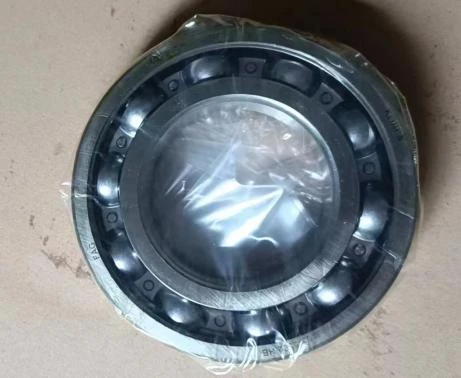
Bearing for Vacuum Filler Lines: A Field Insider’s Take
If you spend your days chasing uptime in packaging plants, you already know the villain: micro-vibration today becomes downtime tomorrow. That’s why this Bearing—a CNC-precision component designed as a German filler spare—caught my eye. Origin is solid and transparent: No.311 Youyi North Street, Xinhua District, Shijiazhuang City, Hebei China. And yes, it’s made specifically for vacuum filler assemblies where hygiene and repeatability matter more than buzzwords.
What’s trending (and why it matters)
- Hygienic design: food-grade seals and low-grease migration.
- Predictive maintenance: vibration signatures per ISO 15242 for on-line monitoring.
- Hybrid builds: steel races with ceramic balls for lower heat and longer L10 life.
- Shorter MOQs with CNC customization—actually helpful for retrofit filler blocks.
Process flow, materials, and testing
The Bearing uses 52100 chrome steel (GCr15) as standard; optional 440C stainless or hybrid ceramic (Si3N4 balls) for aggressive washdown. Process: precision turning → vacuum heat treatment → multi-stage grinding → superfinishing (Ra ≈ 0.02–0.04 μm) → automated assembly in clean conditions. Every lot is noise/vibration tested to ISO 15242, dimensional tolerances to ISO 492 (P6/P5 on request), hardness HRC 60–64, and contact fatigue validated against ISO 281. In-house salt-spray checks on stainless cages are performed for ≈24–72 h (real-world use may vary with sanitizer chemistry).
Where it fits
Vacuum fillers, rotary piston fillers, and conveyors inside food, dairy, and beverage lines. Also shows up in pharma liquid fillers and small-format cosmetics dosing units. To be honest, many customers say the quietness under partial vacuum is the immediate giveaway—less chatter, more consistent fill weights.
Product specifications
| Material | 52100 (GCr15) / 440C / Hybrid ceramic option |
| Tolerance class | ISO 492 P0 standard; P6/P5 available |
| Seals/Lubrication | Food-grade seals; NSF H1 grease (≈ low migration) |
| Hardness | HRC 60–64 (raceways) |
| Vibration (ISO 15242) | ≤1.6 mm/s RMS at 1,800 rpm (test sample, ≈ value) |
| Service life | L10 calculated per ISO 281; typical 18–36 months in filler duty, depends on CIP |
| Certifications | ISO 9001; material RoHS; optional FDA-compliant seal materials |
Advantages in the field
- Lower acoustic signature; operators notice it, not just sensors.
- Precision fit reduces axial play in dosing pistons—tighter fill tolerances.
- CNC repeatability for spare-part interchangeability with German fillers.
- Customization: bore/OD tweaks, cage type, grease selection, laser marking.
Vendor comparison (snapshot)
| Vendor | MOQ | Lead Time | Customization | Certs | Price (≈) |
|---|---|---|---|---|---|
| Bossin Machinery | 10–50 | 2–4 weeks | High (CNC, seals, grease) | ISO 9001, RoHS | Mid |
| Generic Reseller A | 100+ | 4–8 weeks | Low | Mixed | Low |
| European OEM B | 25–100 | 3–6 weeks | Medium | ISO 9001, CE doc | High |
Real-world case notes
A beverage plant in Central Europe swapped legacy units for this Bearing on a rotary vacuum filler. Vibration at 1,500 rpm dropped from 2.1 to 1.4 mm/s RMS; unplanned stops went from 4/month to 1–2/month over a 6‑month run. Operators—some skeptical at first—liked the quieter start-up and the fact that the seals held up better after caustic CIP. Another client in dairy chose the hybrid version to survive hot water rinse; costlier, yes, but it paid back via fewer weekend callouts. I guess that’s the kind of math maintenance teams actually appreciate.
Usage tips
- Specify seal and grease for your sanitizer profile (peracetic vs. caustic).
- Request P6 for piston-guided stations; P5 only if your seats are truly aligned.
- Log ISO 15242 spectra; trending beats guessing.
Citations:
- ISO 281: Rolling bearings — Dynamic load ratings and rating life.
- ISO 492: Rolling bearings — Radial bearings — Tolerances.
- ISO 15242: Rolling bearings — Measuring methods for vibration.
- DIN 625 / DIN 620: Rolling bearings standards for dimensions and accuracy.
Latest news
-
Comprehensive Guide to Wholesale Skip Car Solutions for Construction Efficiency
NewsMar.31,2026
-
Investing in a Wholesale Meat Salted Machine for Business Success
NewsMar.28,2026
-
Revolutionizing Burger Production with Wholesale Burger Making Forming Machine Solutions
NewsMar.26,2026
-
Comprehensive Guide to Wholesale Sausage Filler Price and Equipment Selection
NewsMar.24,2026
-
Investing in a Wholesale Beef Slicing Machine for Enhanced Business Efficiency
NewsMar.21,2026
-
Invest in a Wholesale Clipping Machine for Sausages to Optimize Production
NewsMar.19,2026