
Nov . 06, 2025 13:50 Back to list
Brine Injector for Meat & Poultry – Multi-Needle, High Yield
Brine Injector field notes: what’s working now on the plant floor
I’ve walked enough chill rooms to know: yield and uniformity make or break margins. A modern Brine Injector—the meat marinade machine that quietly decides texture, flavor pickup, and cook loss—has gone from “nice-to-have” to core infrastructure. Flavor-forward products, clean labels, and stricter QA are reshaping specs fast; to be honest, the gear has caught up. From poultry breasts to smoked ham and even lightly brined fish, today’s Brine Injector lines are smarter, cleaner, and easier to service than the clunky rigs many of us grew up with.
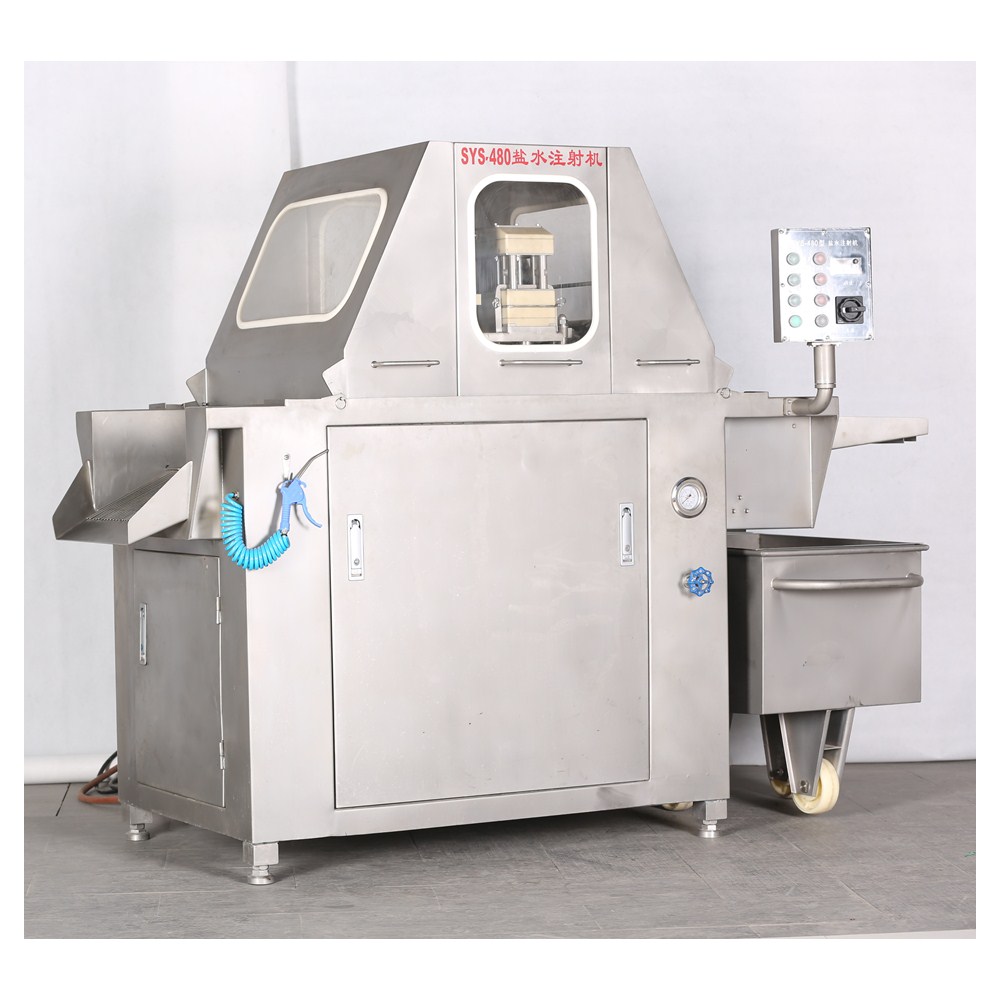
Industry trends at a glance
- Data-driven dosing: closed-loop pressure/flow control to hit ±1–2% pickup targets.
- Hygienic design: CIP-ready manifolds, tool-less needle cassettes, and smoother Ra ≤ 0.8 μm finishes.
- Versatile recipes: lower-sodium brines, phosphate-free blends, and higher-viscosity marinades for premium SKUs.
Typical applications
Poultry fillets and wings, pork shoulders/ham muscles, beef brisket/point cut, trout and whitefish, and—surprisingly—some plant-based protein prototypes. Many customers say the Brine Injector pays for itself on yield alone when moving from tumbling-only to inject-then-tumble.
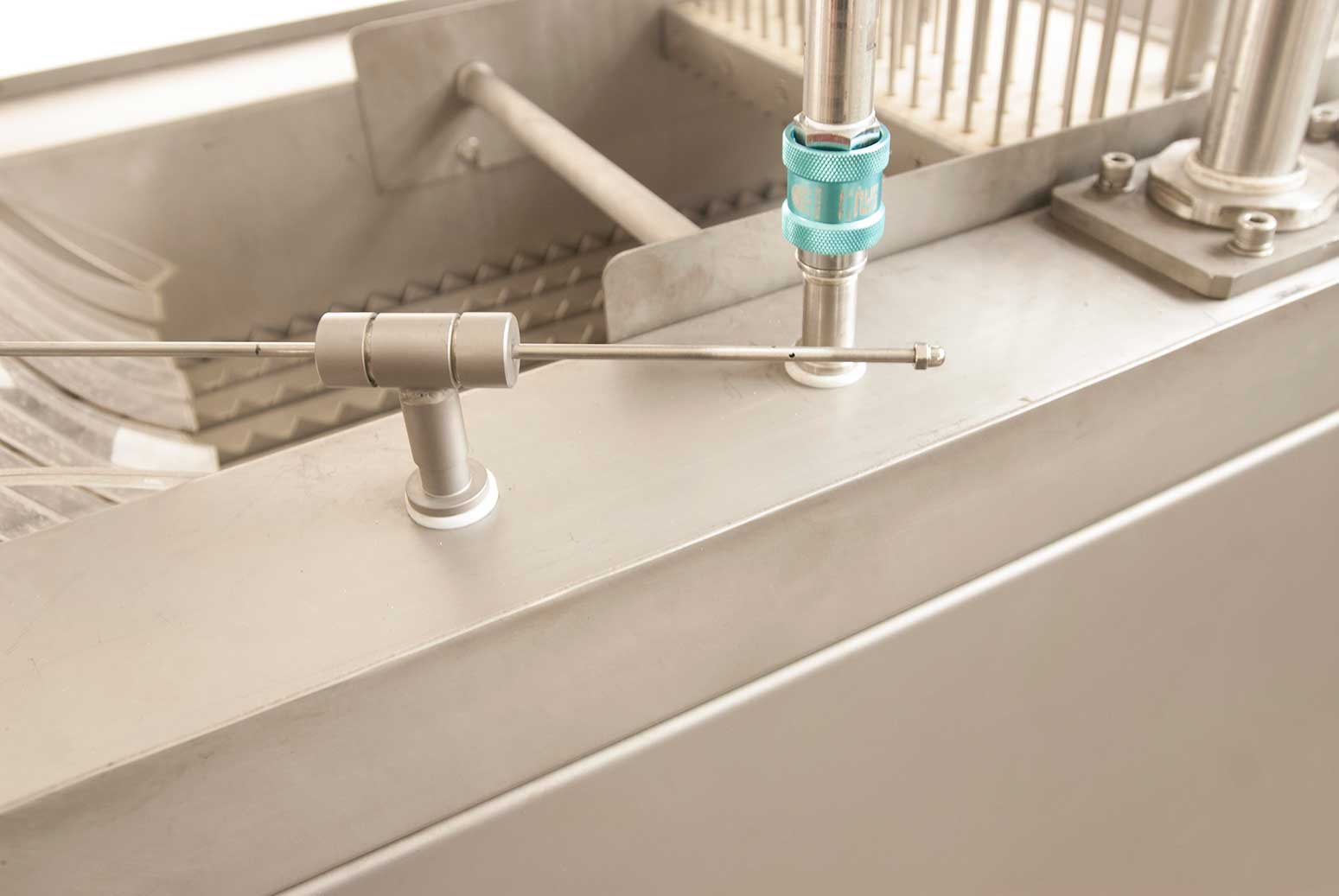
Product specs (representative)
| Construction | AISI 304 SS contact parts (316L upgrade optional), TIG-welded, passivated |
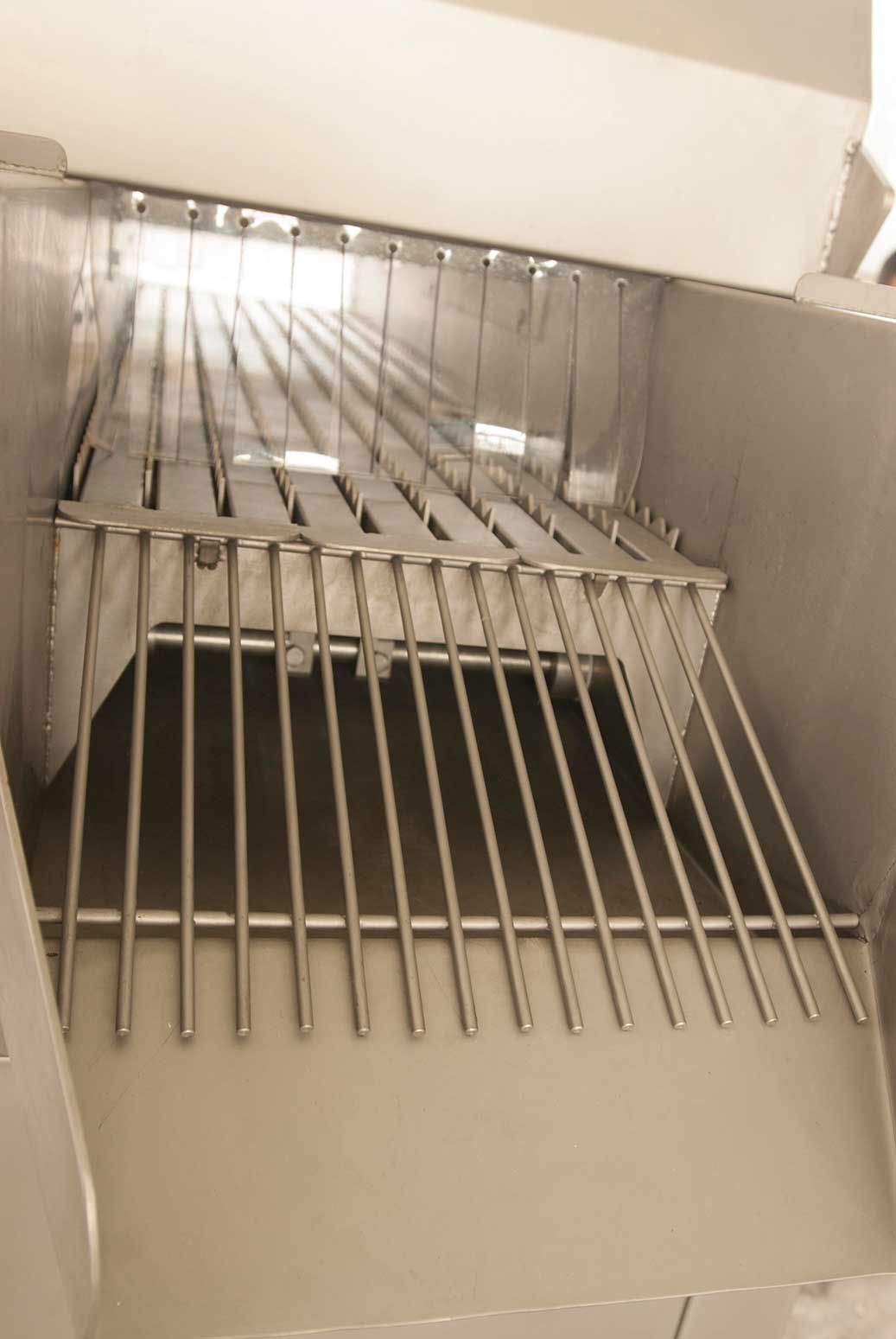
| Needles | 32–256 needles; ø2–4 mm; tenderizing or non-tenderizing; quick-release cassettes |
| Injection pressure | ≈0.1–0.6 MPa (real-world use may vary by cut and viscosity) |
| Throughput | ~500–3,000 kg/h depending on needle density and pick-up target |
| Belt width | 400–600 mm |
| Pump & filtration | Sanitary pump with dual-stage filtration (≈1.5 mm + 0.8 mm screens) |
| Controls | PLC + HMI; recipe library; pressure/flow trending; CIP assist |
| Power | 380–480 V, 3Ph, 50/60 Hz (others on request) |
| Service life | 5–8 years typical with routine maintenance; needles/seals are wear parts |
Process flow, methods, and QA
Brine tank (0–4°C) → coarse filter → sanitary pump → manifold → needle bank → recirculation line → CIP skid. Methods: single-pass injection for uniform fillets; multi-pass for large muscles; inject-then-tumble for distribution. We validate pickup with gravimetric checks (pre/post weight), salinity via salinometer/Brix, and texture via shear tests. Pressure stability within ±0.02 MPa helps keep drip loss predictable. Standards referenced include HACCP plans, EU 1935/2004 food contact, and FDA 21 CFR materials. Surfaces meet ASTM A380/A967 passivation practices; CIP at 60–80°C is common.
Vendor comparison (indicative)
| Vendor | Strengths | Trade-offs |
|---|---|---|
| Bossin Machinery (Hebei, China) | Value pricing, dual filtration, solid hygiene, fast lead times | Fewer high-end IoT bells than top-tier EU brands (usually not a deal-breaker) |
| Premium EU brand | Advanced analytics, deep service network in EU/NA | Higher capex; longer lead times |
| Budget import (generic) | Lowest upfront cost | Sparse documentation, variable QC, limited spare parts |
Customization and certifications
Options: 316L manifolds, different needle geometries, Siemens/Delta PLCs, larger brine tanks, and EPDM/FKM seal sets for salt and acid blends. Certifications available: CE, ISO 9001:2015; equipment is HACCP- and ISO 22000-friendly, designed around EHEDG/EU 1935/2004 principles.
Case notes and feedback
- Poultry plant (APAC): +12% average pickup on fillets at ≈0.25 MPa; cook loss down ~1.1%.
- Ham processor (EU): more uniform brine distribution; rework reduced by ~18% month-over-month.
- Seafood ready-meals: gentle-pressure program avoided gaping, improved flavor consistency.
Operators like the simple CIP prompts; QA teams call out stable pressure trends. It seems that downtime fell mainly due to faster needle cassette swaps.
Where it fits
Industries: poultry, pork/beef, deli/charcuterie, seafood, and prepared foods. Origin and support: No.311 Youyi North Street, Xinhua District, Shijiazhuang City, Hebei China.
Authoritative citations
- EU Regulation (EC) No 1935/2004 on materials intended to come into contact with food: https://eur-lex.europa.eu
- FDA 21 CFR (Food Contact Substances) and GMP: https://www.ecfr.gov
- ISO 22000:2018 Food Safety Management Systems: https://www.iso.org
- ASTM A380/A967 for stainless steel cleaning/passivation: https://www.astm.org
- USDA FSIS Processing Guidelines (injection/brining practices): https://www.fsis.usda.gov
- EHEDG Guidelines on hygienic equipment design: https://www.ehedg.org
Latest news
-
Comprehensive Guide to Wholesale Skip Car Solutions for Construction Efficiency
NewsMar.31,2026
-
Investing in a Wholesale Meat Salted Machine for Business Success
NewsMar.28,2026
-
Revolutionizing Burger Production with Wholesale Burger Making Forming Machine Solutions
NewsMar.26,2026
-
Comprehensive Guide to Wholesale Sausage Filler Price and Equipment Selection
NewsMar.24,2026
-
Investing in a Wholesale Beef Slicing Machine for Enhanced Business Efficiency
NewsMar.21,2026
-
Invest in a Wholesale Clipping Machine for Sausages to Optimize Production
NewsMar.19,2026