
Sep . 09, 2025 21:40 Back to list
Efficient & Hygienic Meat Pump for Food Processing
Advancing Food Processing: The Role of Industrial Meat Pumps
In the dynamic landscape of food processing, efficiency, hygiene, and product integrity are paramount. Industrial pumps are critical components, and among them, the Meat pump stands as a specialized solution designed to handle viscous, solid-laden, and delicate food products with exceptional care. This specialized equipment is indispensable for transferring various meat and poultry products, from ground meats and emulsions to delicate whole muscle pieces, ensuring minimal damage and maximum yield.
Industry trends are increasingly focused on automation, stringent sanitary standards, and the reduction of product waste. Manufacturers are seeking pumping solutions that not only increase throughput but also maintain the organoleptic properties and structural integrity of processed foods. The demand for pumps capable of gentle handling, easy cleaning, and robust performance in continuous operation environments is escalating, driven by consumer expectations for higher quality and safer food products. Furthermore, energy efficiency and reduced operational costs are significant considerations for B2B decision-makers, pushing innovation towards more sustainable and economically viable pumping technologies.
The Meticulous Manufacturing Process of a Meat Pump
The production of a high-quality Meat pump is a multi-stage process, meticulously engineered to meet the demanding requirements of the food processing industry. Precision and adherence to sanitary standards are non-negotiable at every step.
Process Flow:
- Material Selection: The foundation of any sanitary pump is its material. For a Meat pump, this invariably means high-grade austenitic stainless steel, typically AISI 304 or AISI 316L. These materials are chosen for their superior corrosion resistance, durability, and inertness, ensuring no contamination of the food product. Components like seals often utilize FDA-approved elastomers such as EPDM, Viton, or PTFE.
-
Component Manufacturing:
- Casting/Forging: Pump casings and impellers may begin as precision castings or forgings to achieve robust initial forms. This provides a dense, non-porous structure crucial for hygiene.
- CNC Machining: Critical components, including impellers, pump housings, and shaft assemblies, undergo rigorous CNC (Computer Numerical Control) machining. This ensures extremely tight tolerances, critical for efficient operation, minimal wear, and ease of cleaning. Surface roughness is meticulously controlled to Ra
- Surface Finishing: All food-contact surfaces are polished, often through electropolishing, to achieve a smooth, mirror-like finish. This further enhances hygiene by eliminating microscopic crevices where bacteria could harbor, making Cleaning-In-Place (CIP) and Sterilization-In-Place (SIP) highly effective.
- Assembly: Components are assembled in a clean environment to prevent any foreign material ingress. Seals, bearings, and the drive unit are integrated with precision.
-
Quality Control & Testing: Each Meat pump undergoes comprehensive testing:
- Hydrostatic Testing: Ensures casing integrity and leak-free operation under pressure.
- Performance Testing: Verifies flow rate, head, power consumption, and efficiency against design specifications, often adhering to standards like ANSI/HI 1.6 for centrifugal pumps.
- Material Certification: Traceability of all food-contact materials to ISO and FDA standards.
The typical service life of a well-maintained Meat pump can exceed 10-15 years, largely due to the robust material selection and precision engineering. Target industries for these pumps include meat processing (beef, pork, lamb, game), poultry processing, seafood processing, prepared meals, and even certain pharmaceutical or pet food applications where viscous, particulate-laden media require gentle handling. Advantages include significant energy savings through optimized impeller designs, superior corrosion resistance from 316L stainless steel, and demonstrable effectiveness in maintaining product texture and yield in scenarios involving delicate meat emulsions or chunky products.
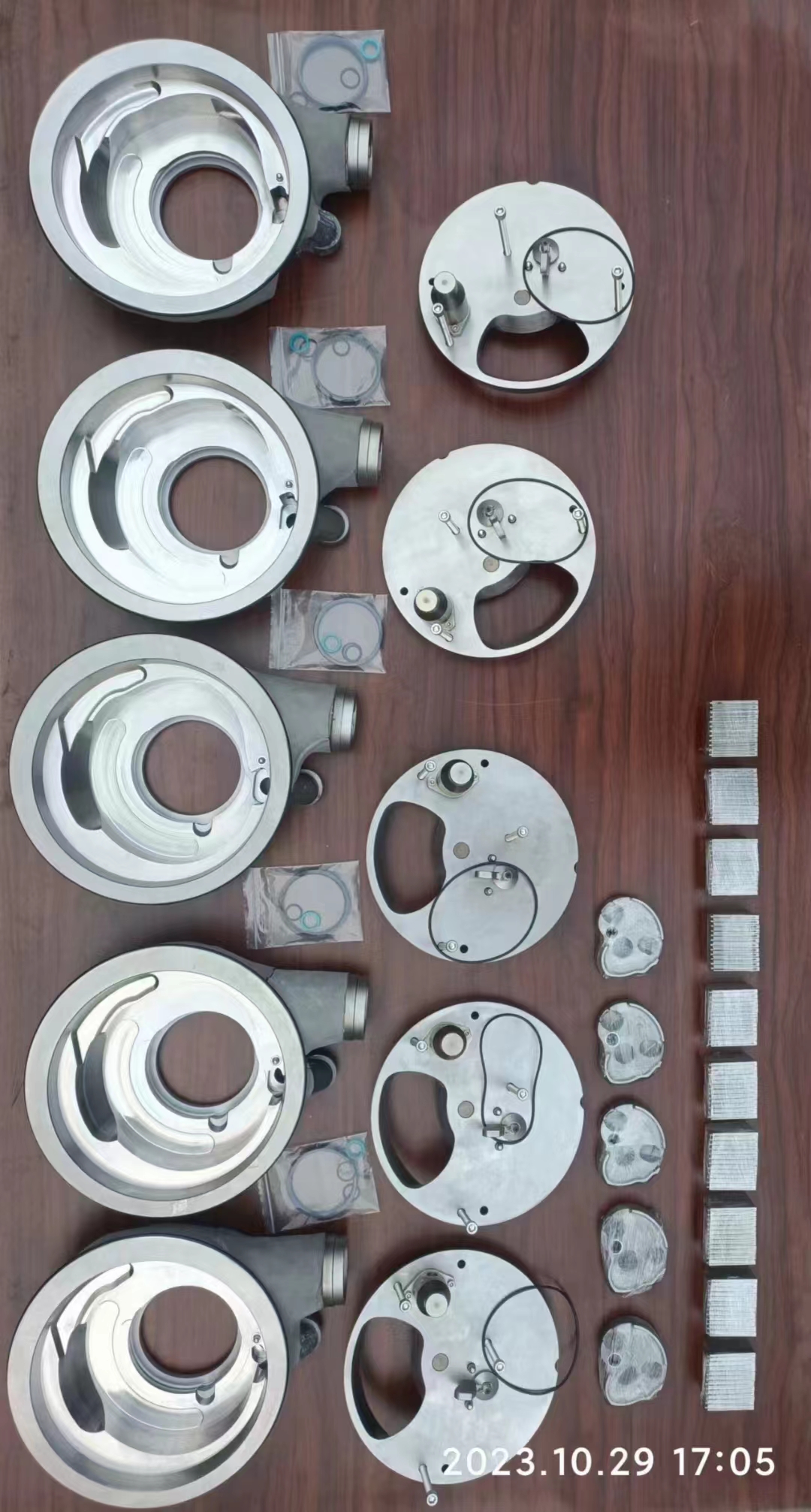
Modern industrial Meat pump designed for sanitary food processing.
Key Technical Specifications and Parameters
Understanding the technical specifications of a Meat pump is crucial for selecting the right equipment for specific processing needs. These parameters dictate performance, efficiency, and suitability for various applications.
Core Components Explained:
- Pump Housing (Casing): Typically robust 316L stainless steel, designed for high pressure and easy cleaning. Often features tangential outlets to minimize product degradation.
- Impeller: Open or semi-open impeller designs are common to handle solids and viscous fluids without clogging or damaging product. Precision balanced to reduce vibration and extend bearing life.
- Shaft Seal: Critical for hygiene and preventing leakage. Common types include mechanical seals (single or double, often flushed for abrasive products) or lip seals. Materials must be food-grade.
- Motor: High-efficiency electric motors (IE3/IE4 rated) are standard, often with variable frequency drives (VFD) for precise flow control and energy optimization.
Product Specification Table: Industrial Meat Pump (Example Model)
| Parameter | Specification |
|---|---|
| Model Series | BPM-300-S |
| Max Flow Rate | Up to 30 m³/h (132 GPM) |
| Max Discharge Pressure | Up to 5 bar (72 PSI) |
| Motor Power | 3 kW - 11 kW (4 HP - 15 HP) |
| Inlet/Outlet Size | DN80 / DN65 (3" / 2.5") |
| Material (Wetted Parts) | AISI 316L Stainless Steel |
| Seal Type | Single Mechanical Seal (SiC/SiC/EPDM, FDA-approved) |
| Max Particle Size | Up to 50 mm (2 inches) |
| Operating Temperature | -10°C to 120°C (14°F to 248°F) |
| Viscosity Range | Up to 50,000 cP |
| Surface Finish | Ra |
| Certifications | CE, FDA, 3A (optional) |
These parameters highlight the pump's capability to handle varying fluid dynamics and product characteristics while adhering to strict sanitary regulations. Precision engineering ensures consistent performance and reliability, crucial for demanding food production lines.
Diverse Application Scenarios and Proven Advantages
The versatility of the Meat pump makes it an invaluable asset across numerous food processing applications, particularly where product integrity and hygiene are non-negotiable.
Key Application Scenarios:
- Ground Meat Transfer: Efficiently moves ground beef, pork, or poultry from grinders to mixers or packaging lines, maintaining texture and preventing smearing.
- Sausage and Emulsion Pumping: Ideal for transferring viscous sausage emulsions or pre-mixed ingredients to stuffers, ensuring consistent product quality and preventing air entrapment.
- Poultry and Seafood Processing: Gentle transfer of poultry trimmings, fish paste, or delicate seafood pieces without degradation, crucial for products like surimi or fish cakes.
- Prepared Meals and Deli Products: Handling of chunky ingredients, thick sauces, or components of ready meals that contain meat particulates.
- Pet Food Production: Pumping of raw meat slurries or cooked pet food formulations, often with high solid content and viscosity.
Technical Advantages:
- Gentle Product Handling: Optimized impeller and casing designs minimize shear stress and pulsation, preserving the structure and texture of delicate meat products, thereby reducing rework and improving final product quality.
- Superior Hygiene and Cleanability: Constructed from 316L stainless steel with electropolished surfaces, these pumps are designed for full CIP/SIP compatibility. Quick-release clamps and minimized dead spaces facilitate thorough cleaning and sterilization, preventing bacterial growth and cross-contamination.
- Energy Efficiency: Advanced hydraulic designs, coupled with high-efficiency motors and optional VFDs, significantly reduce energy consumption. This translates into lower operational costs and a reduced environmental footprint for food processors.
- Robust Construction and Durability: Engineered for continuous duty in demanding industrial environments, featuring heavy-duty bearings, robust shafts, and corrosion-resistant materials, ensuring a long service life with minimal downtime.
- Versatility and Customization: Available in various configurations regarding port sizes, seal types, and impeller designs to handle a wide range of viscosities, particle sizes, and temperatures, allowing for tailored solutions.
These advantages position the Meat pump as a critical investment for processors aiming to optimize their operations, enhance product quality, and meet stringent regulatory requirements.
Vendor Comparison: Selecting the Right Meat Pump Partner
Choosing the right supplier for an industrial Meat pump involves evaluating not just the product's technical merits but also the vendor's reputation, support, and long-term value proposition. Below is a comparative overview of typical vendor offerings.
Comparative Table: Meat Pump Vendors
| Feature/Criteria | Leading Brand X | Specialist Manufacturer Y | Cost-Effective Provider Z |
|---|---|---|---|
| Product Range | Extensive, wide range of sanitary pumps | Focused on high-viscosity, particulate pumps | Standardized models, competitive pricing |
| Material Quality | Premium 316L SS, comprehensive material certs | High-grade 316L SS, excellent finishes | Standard 304/316 SS, functional finishes |
| Certifications | 3A, FDA, EHEDG, CE | FDA, CE, often 3A | CE, basic FDA compliance |
| Customization | Moderate to high, modular options | High, specialized engineering solutions | Limited, standard configurations |
| After-Sales Support | Global network, comprehensive parts/service | Regional specialists, strong technical support | Basic support, focus on spare parts |
| Price Point | Premium | Mid to High | Budget-friendly |
| Innovation Focus | R&D leader, advanced features | Problem-solving, specific application optimization | Reliability, cost-effectiveness |
When evaluating vendors for a Meat pump, consider your specific needs: whether standard models suffice or if bespoke engineering is required. A vendor with strong adherence to industry standards (like 3A, FDA, EHEDG), robust technical support, and transparent material traceability will ultimately provide greater peace of mind and operational longevity.
Customized Solutions for Unique Processing Challenges
While standard Meat pump models address a wide range of applications, many food processing operations have unique requirements that necessitate customized solutions. Tailored pumps can significantly enhance efficiency, optimize product quality, and integrate seamlessly into existing complex systems.
Customization options can include modifications to:
- Impeller Design: Specific impellers can be designed to handle exceptionally large or delicate particulates, highly abrasive products, or ultra-high viscosity slurries, minimizing shear and preventing product degradation.
- Material Specifications: Beyond standard 316L, certain applications may require specialized alloys for extreme pH environments or specific regulatory compliance. Elastomers for seals can also be selected for resistance to particular chemicals or temperatures.
- Port Configurations: Custom inlet and outlet sizes or orientations, flange types (e.g., DIN, ANSI, Tri-Clamp), or specialized connections can be integrated to match existing piping and equipment.
- Heating/Cooling Jackets: For temperature-sensitive products, pumps can be fitted with heating or cooling jackets to maintain optimal product temperature during transfer, preventing solidification or degradation.
- Drive Systems: Integration with specific motor types, gear reducers, or advanced control systems (e.g., ATEX-certified for hazardous environments, specific HMI integration) can be provided.
- Surface Finishes: Even higher levels of electropolishing or specialized coatings can be applied for ultra-sanitary applications or when dealing with highly adhesive products.
Engaging with a manufacturer that possesses strong engineering capabilities and a deep understanding of food processing dynamics is key to developing effective customized Meat pump solutions. This ensures that the final equipment precisely meets operational demands, extends equipment life, and supports product quality objectives.
Application Case Studies: Real-World Success with Meat Pumps
Practical demonstrations of how a Meat pump delivers tangible benefits are crucial for B2B decision-makers. These case studies highlight the direct impact on efficiency, product quality, and operational costs.
Case Study 1: Enhanced Sausage Production Efficiency
- Client: A medium-sized sausage manufacturer in Europe.
- Challenge: The client was using a positive displacement pump that caused shear damage to their delicate sausage emulsion, leading to inconsistent texture and reduced yield. Cleaning was also labor-intensive, impacting production schedules.
- Solution: Implementation of a specialized centrifugal Meat pump with a wide-channel, open impeller designed for gentle handling of viscous, particulate-laden products. The pump featured a quick-release clamp design and fully drainable casing.
-
Results:
- Product Quality Improvement: Significant reduction in shear, resulting in a 15% improvement in final sausage texture consistency and a 3% increase in usable product yield.
- Operational Efficiency: CIP cycle time reduced by 25% due to improved cleanability, freeing up production hours.
- Energy Savings: The high-efficiency motor and optimized hydraulic design led to a 10% reduction in energy consumption compared to the previous pump.
- Client Feedback: "The new meat pump has transformed our emulsion transfer. Not only is our product quality noticeably better, but our cleaning crews are also thrilled with how easy it is to maintain. A truly excellent investment."
Case Study 2: Improved Seafood Paste Transfer in Asia
- Client: A large seafood processing plant producing fish paste and surimi products.
- Challenge: The existing pumps frequently clogged with fibrous fish material and required constant manual intervention, leading to production bottlenecks and inconsistent flow rates.
- Solution: Installation of a high-solids handling Meat pump with a specially designed clog-resistant impeller and a robust mechanical seal system. The pump was integrated with a VFD for precise flow control.
-
Results:
- Reduced Downtime: Clogging incidents decreased by over 80%, leading to a significant increase in continuous operation time.
- Consistent Product Output: Stable flow rates ensured uniform quality of the fish paste, improving downstream processing.
- Maintenance Savings: Reduced need for manual unclogging and less wear on components, leading to lower maintenance costs and longer intervals between service.
- Client Feedback: "The new meat pump handles our tough fish paste beautifully. We've seen a dramatic drop in production stoppages and our operators are much happier. It's a reliable workhorse."
Authoritativeness and Trustworthiness: Our Commitment
Building trust and demonstrating authority are paramount in the B2B sector. Our commitment to quality, compliance, and customer satisfaction underpins every Meat pump we deliver.
Certifications and Compliance:
Our manufacturing processes and products strictly adhere to international quality and safety standards.
- ISO 9001 Certified: Our quality management system is certified to ISO 9001, ensuring consistent product quality and continuous improvement.
- FDA Compliance: All food-contact materials meet FDA (Food and Drug Administration) regulations, guaranteeing safety for food processing applications.
- CE Marking: Our products comply with the essential health and safety requirements of European directives, indicated by the CE mark.
- 3-A Sanitary Standards (Optional): For specific applications requiring the highest level of sanitary design, pumps can be supplied meeting 3-A Sanitary Standards, ensuring easy cleanability and preventing bacterial proliferation.
Warranty and After-Sales Support:
- Warranty Commitment: We offer a comprehensive 1-year warranty on all parts and manufacturing defects for our Meat pump products, underscoring our confidence in their quality and durability. Extended warranty options are available.
- Lead Time and Fulfillment: Typical lead times for standard pump configurations range from 4-6 weeks. Custom solutions may require 8-12 weeks, depending on complexity. We maintain transparent communication regarding order status and delivery schedules.
- Technical Support: Our dedicated team of engineers provides expert technical assistance, from initial selection and installation guidance to troubleshooting and optimization. Support is available via phone, email, and on-site visits where necessary.
- Spare Parts Availability: We ensure a robust supply chain for genuine spare parts, minimizing downtime and extending the operational life of your equipment. Critical components are typically stocked for immediate dispatch.
Frequently Asked Questions (FAQ):
Q: What types of products can a Meat pump handle?
A: Our Meat pump is designed to handle a wide range of viscous, solid-laden products including ground meats, sausage emulsions, poultry trimmings, fish paste, purees, and other delicate food items. It excels with products containing particles up to 50mm without damage.
Q: How does your Meat pump ensure hygiene?
A: We utilize AISI 316L stainless steel for all wetted parts, which are electropolished to a surface roughness of Ra
Q: Can the pump be customized for my specific application?
A: Absolutely. We offer extensive customization options for impeller design, material selection, seal types, port connections, and motor configurations to precisely match your operational needs and product characteristics.
Q: What maintenance is required for the Meat pump?
A: Our pumps are designed for low maintenance. Routine checks typically include seal inspection, lubrication of bearings (if applicable), and ensuring proper motor function. Detailed maintenance schedules are provided with each unit.
Conclusion
The industrial Meat pump is a cornerstone technology in modern food processing, embodying precision engineering, advanced hygiene principles, and robust performance. By offering gentle product handling, superior cleanability, and energy efficiency, these pumps enable food processors to achieve higher product quality, increased operational efficiency, and enhanced compliance with stringent sanitary regulations. Investing in a high-quality meat pump from a reputable manufacturer is a strategic decision that drives long-term value and competitive advantage in the demanding food industry.
References
- ISO.org. International Organization for Standardization. ISO 9001 Quality Management. Retrieved from [Actual ISO website reference, e.g., https://www.iso.org/iso-9001-quality-management.html]
- FDA.gov. U.S. Food and Drug Administration. Food Additive Status List. Retrieved from [Actual FDA website reference, e.g., https://www.fda.gov/food/ingredients-additives-gras-packaging-guidance-documents/food-additive-status-list]
- 3-A Sanitary Standards, Inc. 3-A Accepted Practices. Retrieved from [Actual 3-A Sanitary Standards website reference, e.g., https://www.3-a.org/]
- European Commission. Growth. Internal Market, Industry, Entrepreneurship and SMEs. CE Marking. Retrieved from [Actual European Commission website reference, e.g., https://ec.europa.eu/growth/single-market/ce-marking_en]
- Hydraulic Institute. ANSI/HI Standards. Centrifugal Pumps. Retrieved from [Actual Hydraulic Institute website reference, e.g., https://www.pumps.org/standards-and-guides/ansihi-standards]
Latest news
-
Comprehensive Guide to Wholesale Skip Car Solutions for Construction Efficiency
NewsMar.31,2026
-
Investing in a Wholesale Meat Salted Machine for Business Success
NewsMar.28,2026
-
Revolutionizing Burger Production with Wholesale Burger Making Forming Machine Solutions
NewsMar.26,2026
-
Comprehensive Guide to Wholesale Sausage Filler Price and Equipment Selection
NewsMar.24,2026
-
Investing in a Wholesale Beef Slicing Machine for Enhanced Business Efficiency
NewsMar.21,2026
-
Invest in a Wholesale Clipping Machine for Sausages to Optimize Production
NewsMar.19,2026