
Sep . 15, 2025 09:20 Back to list
Precision Engineered Shafts: Durable & High-Performance Solutions
Understanding the Critical Role of Industrial Shafts
In the intricate landscape of industrial machinery, the Shaft stands as an indispensable component, serving as the backbone for power transmission and rotational motion across countless applications. From high-speed turbines to heavy-duty rolling mills, the integrity and precision of this element directly dictate the operational efficiency, reliability, and longevity of the entire system. At Bossin Machinery, our commitment to engineering excellence ensures that every shaft produced meets the stringent demands of modern industrial environments, delivering unparalleled performance and durability.
This comprehensive overview delves into the multifaceted aspects of industrial shafts, exploring their manufacturing intricacies, technical specifications, diverse applications, and the strategic advantages offered by advanced engineering. We aim to provide B2B decision-makers and technical professionals with the insights necessary to select and implement shaft solutions that optimize operational performance and reduce total cost of ownership.
Current Industry Trends in Shaft Manufacturing
The industrial Shaft sector is continually evolving, driven by demands for higher efficiency, greater durability, and enhanced operational safety. Key trends include:
- Advanced Material Science: Increasing adoption of high-strength alloys (e.g., maraging steels, specific grades of stainless steel) and composite materials for weight reduction and improved performance under extreme conditions (high temperature, corrosive environments).
- Precision Manufacturing & Automation: Greater reliance on multi-axis CNC machining, robotic grinding, and automated inspection systems to achieve tighter tolerances and superior surface finishes, minimizing dynamic imbalance and vibrational issues.
- Surface Engineering: Widespread use of advanced surface treatments such as nitriding, carburizing, chrome plating, and thermal spray coatings to enhance wear resistance, fatigue strength, and corrosion protection.
- Predictive Maintenance & IoT Integration: Development of smart shafts equipped with integrated sensors for real-time monitoring of temperature, vibration, and torque, enabling predictive maintenance strategies and reducing unscheduled downtime.
- Sustainability: Focus on energy-efficient manufacturing processes and the use of recyclable materials, aligning with global environmental regulations and corporate social responsibility initiatives.
The Meticulous Manufacturing Process of a High-Performance Shaft
The creation of a high-quality industrial Shaft is a complex, multi-stage process that demands precision, expertise, and rigorous quality control. Our manufacturing workflow adheres to the highest international standards, ensuring optimal performance and longevity.
Key Process Steps:
- 1. Material Selection & Preparation: We begin with selecting premium-grade materials such as carbon steel (e.g., C45, 40Cr), alloy steel (e.g., 42CrMo4, 34CrNiMo6), or stainless steel (e.g., 304, 316L) based on application requirements for strength, hardness, toughness, and corrosion resistance. Materials undergo chemical analysis and ultrasonic testing to confirm integrity.
- 2. Forging or Casting: Large or complex shafts often begin as forgings to achieve superior grain structure and mechanical properties, enhancing strength and fatigue resistance. For specific geometries, casting may be employed, followed by heat treatment to refine the microstructure.
- 3. Rough Machining: The initial machining phase removes excess material, bringing the shaft closer to its desired dimensions. This stage prepares the workpiece for subsequent heat treatments and precision operations.
- 4. Heat Treatment: This critical step involves processes like quenching, tempering, normalizing, or annealing to achieve specific mechanical properties such as increased hardness, ductility, or stress relief. Surface hardening techniques like induction hardening or carburizing are applied for enhanced wear resistance.
- 5. Finish Machining (CNC): High-precision CNC lathes, milling machines, and grinders are utilized to achieve final dimensions, intricate features, and specified tolerances. Our state-of-the-art CNC equipment ensures micron-level accuracy.
- 6. Grinding & Polishing: For critical surface finish requirements, grinding and super-finishing operations are performed. This reduces friction, minimizes wear on mating components, and prevents stress concentrations.
- 7. Surface Treatment (Optional): Depending on the application, additional surface treatments such as hard chrome plating, nitriding, or specialized coatings may be applied for enhanced corrosion resistance, abrasion resistance, or reduced friction.
- 8. Quality Control & Testing: Every shaft undergoes rigorous inspection, including dimensional checks, hardness testing, magnetic particle inspection (MPI) or ultrasonic testing (UT) for internal defects, and dynamic balancing (for high-speed applications). Adherence to standards like ISO 9001, ANSI B89.3.1, and client-specific requirements is strictly maintained.
This meticulous process ensures a superior product with an extended service life, even in the most demanding environments, such as petrochemical, metallurgy, and water supply & drainage systems. The resulting advantages include significant energy saving due to reduced friction and enhanced corrosion resistance, directly translating to lower operational costs and increased uptime.
Technical Specifications and Performance Parameters
Understanding the technical specifications of a Shaft is paramount for selecting the correct component for a given application. Key parameters include:
- Material Properties: Tensile strength, yield strength, hardness (e.g., Brinell, Rockwell), impact strength, and fatigue limit.
- Geometric Tolerances: Strict control over diameter, length, runout (TIR), concentricity, straightness, and perpendicularity to ensure smooth operation and prevent premature wear of bearings and seals.
- Surface Finish: Measured in Ra (roughness average) or Rz (average maximum peak-to-valley height), critical for reducing friction and enhancing fatigue resistance, typically ranging from Ra 0.2 to 0.8 µm for bearing journals.
- Dynamic Balancing: For high-speed rotating applications, dynamic balancing according to ISO 1940-1 standards (e.g., G2.5 for general machinery, G1 for precision equipment) is crucial to minimize vibration and extend bearing life.
Typical Product Specification Table
| Parameter | Standard Industrial Shaft | High-Performance Shaft (Bossin Machinery) |
|---|---|---|
| Material Options | C45, 40Cr | 42CrMo4, 34CrNiMo6, 316L Stainless |
| Tensile Strength | 600-700 MPa | 800-1100 MPa (Heat Treated) |
| Hardness (HRC) | 25-30 | 35-58 (Surface Hardened) |
| Surface Roughness (Ra) | 0.8 - 1.6 µm | 0.2 - 0.8 µm |
| Geometric Runout (TIR) | Max 0.05 mm | Max 0.01 mm |
| Dynamic Balancing | ISO 1940-1 G6.3 | ISO 1940-1 G2.5 or better |
| Corrosion Resistance | Moderate (if plated) | Excellent (stainless/special coatings) |
| Typical Service Life | 3-5 years | 7-10+ years (application dependent) |
These specifications underscore the difference between standard components and engineered solutions designed for optimal performance under rigorous industrial conditions.
Diverse Application Scenarios Across Key Industries
The versatility of the industrial Shaft makes it a foundational element across a broad spectrum of industries, each presenting unique challenges that require tailored solutions.
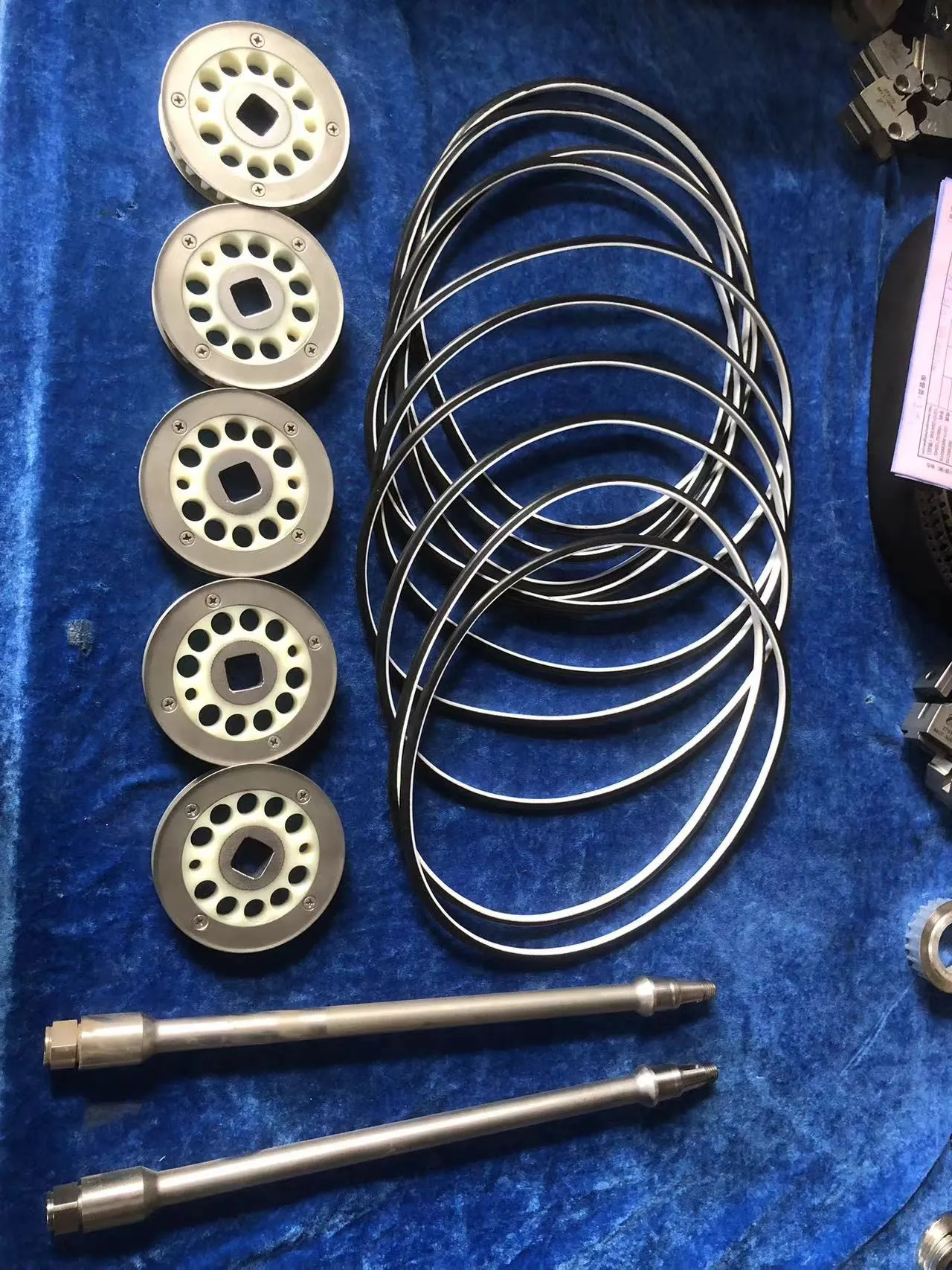
Image: Example of a precision-engineered industrial shaft.
- Petrochemical Industry: Critical for pumps, compressors, and turbines operating in highly corrosive and high-temperature environments. Advantages include enhanced corrosion resistance through specialized coatings and material selection (e.g., duplex stainless steel), ensuring extended operational life and safety.
- Metallurgy and Heavy Machinery: Integral to rolling mills, gearboxes, and heavy presses, where shafts must withstand immense static and dynamic loads, high torque, and abrasive conditions. Our shafts offer superior strength, toughness, and wear resistance, significantly reducing downtime.
- Water Supply & Drainage: Essential components in large-scale pumping stations and wastewater treatment plants, often exposed to corrosive fluids and continuous operation. Precision-machined and properly treated shafts provide long-term reliability and minimal maintenance.
- Energy Sector (Wind Turbines, Generators): Transmitting massive power in challenging outdoor environments. Shafts for wind turbines require exceptional fatigue strength, structural integrity, and resistance to environmental factors, contributing to maximum energy capture and reduced operational costs.
- General Industrial Machinery: From automotive manufacturing to food processing, shafts drive conveyor systems, mixing equipment, and various rotational components, demanding versatility and adherence to diverse industry standards.
In each scenario, the selection of the correct shaft material, design, and manufacturing process is crucial for achieving specific performance advantages such as increased energy saving, superior corrosion resistance, and prolonged operational lifespan.
Technical Advantages of Bossin Machinery's Shaft Solutions
Bossin Machinery leverages decades of expertise and advanced manufacturing capabilities to deliver industrial Shaft solutions that provide distinct technical advantages:
- Extended Durability and Service Life: Through meticulous material selection, optimized heat treatments, and precision machining, our shafts exhibit superior fatigue strength and wear resistance, leading to significantly longer operational cycles and reduced replacement frequency.
- Unmatched Precision and Performance: Our adherence to stringent geometric tolerances (e.g., ISO 2768-1 fine) and dynamic balancing standards (e.g., ISO 1940-1 G2.5) minimizes vibration, noise, and friction, optimizing machine performance and extending the life of interconnected components like bearings and seals.
- Superior Corrosion and Chemical Resistance: Utilizing high-grade stainless steels and advanced surface coatings (e.g., galvanic, ceramic, polymer), our shafts withstand aggressive chemical agents and harsh environmental conditions prevalent in marine, chemical processing, and wastewater treatment applications.
- Enhanced Energy Efficiency: The combination of optimal material properties, smooth surface finishes, and precise dynamic balancing reduces parasitic losses from friction and vibration, contributing to lower energy consumption and increased operational efficiency for the entire system.
- Reduced Maintenance and Downtime: The inherent reliability and robustness of our shafts translate into fewer maintenance interventions and minimized unscheduled downtime, leading to substantial cost savings over the product's lifecycle.
- High Load Bearing Capacity: Engineered for peak performance, our shafts are designed to manage extreme static and dynamic loads, ensuring stable and safe operation even under severe operational stresses.
Vendor Comparison: Selecting the Right Shaft Partner
Choosing a reliable vendor for industrial shafts involves evaluating several critical factors beyond just price. Decision-makers should consider the following:
Key Comparison Criteria:
| Criterion | Standard Vendor Offerings | Bossin Machinery Advantage |
|---|---|---|
| Manufacturing Capability | Limited machinery, basic processes. | Advanced multi-axis CNC, specialized forging, extensive heat treatment. |
| Quality Certifications | Basic ISO 9001 (if any). | ISO 9001:2015, API, ASTM, specific industry standards. |
| R&D and Innovation | Minimal investment, standard designs. | Continuous material science research, design optimization, IoT integration. |
| Customization Expertise | Limited to minor modifications. | Full-scope custom design, material, surface treatment, and prototyping. |
| Technical Support | Basic product information. | Dedicated engineering team, application support, failure analysis. |
| Lead Time Reliability | Variable, prone to delays. | Streamlined production, reliable scheduling, transparent communication. |
By meticulously evaluating these criteria, businesses can partner with a manufacturer like Bossin Machinery that not only supplies a component but also provides a comprehensive, high-value solution.
Tailored Excellence: Customized Shaft Solutions
Off-the-shelf solutions rarely meet the precise demands of complex industrial systems. Bossin Machinery specializes in designing and manufacturing customized Shaft solutions that perfectly align with unique application requirements.
Our engineering team collaborates closely with clients from conceptualization to deployment, ensuring that every aspect of the shaft — from material composition and heat treatment to geometric configuration and surface finish — is optimized for peak performance within its intended operational environment. This bespoke approach allows us to address specific challenges such as extreme load conditions, abrasive media, high-speed rotational demands, or unique spatial constraints.
Customization Capabilities Include:
- Material Selection: Utilizing specialized alloys (e.g., inconel, titanium alloys) for high-performance applications or specific stainless steel grades for extreme corrosion resistance.
- Design Modifications: Incorporating unique geometries, keyways, splines, threads, or integrated features to meet specific assembly and functional requirements.
- Surface Engineering: Applying custom coatings such as thermal sprays (HVOF), PVD/CVD, or specialized polymer coatings for enhanced wear, friction, or chemical resistance.
- Precision Balancing: Tailored dynamic balancing to meet exceptionally tight G-values for ultra-high-speed or vibration-sensitive applications.
- Integrated Sensing: Developing smart shafts with embedded sensors for real-time data acquisition and predictive maintenance integration.
Our rapid prototyping and robust testing protocols ensure that custom solutions are validated for performance and reliability before full-scale production, offering peace of mind and optimizing project timelines.
Real-World Application Case Studies
Our commitment to engineering robust and reliable industrial shafts is validated by successful deployments in challenging environments. Here are illustrative examples:
Case Study 1: Enhanced Lifespan in Petrochemical Pumping
Challenge: A major petrochemical client experienced frequent failures of pump shafts in their highly corrosive crude oil transfer system, leading to costly downtime and increased maintenance. Standard stainless steel shafts suffered from pitting corrosion and stress corrosion cracking within 18 months.
Solution: Bossin Machinery engineered a custom shaft solution using a specific super duplex stainless steel alloy (e.g., UNS S32750) combined with a proprietary surface hardening treatment. The design was optimized for improved stress distribution and dynamic stability.
Result: The new shafts demonstrated superior resistance to both corrosion and fatigue. Operational lifespan increased from 18 months to over 60 months, reducing maintenance costs by 70% and significantly improving plant uptime and safety.
Case Study 2: Performance Optimization in High-Speed Wind Turbines
Challenge: A leading wind turbine manufacturer sought to enhance the efficiency and reliability of their next-generation 5MW turbines. The primary challenge was to reduce vibrational losses and extend the main shaft's fatigue life under variable wind loads and extreme temperature fluctuations.
Solution: We developed a specialized main rotor shaft from high-strength forged alloy steel (e.g., 34CrNiMo6), incorporating advanced heat treatment for optimal toughness and fatigue strength. Critical design elements included refined journal geometry and dynamic balancing to ISO G1.0 standards. Integrated sensor ports were also designed for future predictive maintenance capabilities.
Result: The custom shafts reduced bearing wear by 25% and extended expected operational life by 15%, contributing to a measurable increase in overall turbine efficiency and a reduction in Levelized Cost of Energy (LCOE) for the operator.
Commitment to : Trustworthiness and Authoritativeness
Bossin Machinery’s reputation is built on unwavering adherence to the highest standards of Expertise, Experience, Authoritativeness, and Trustworthiness ().
Certifications and Quality Assurance:
- ISO 9001:2015 Certified: Our quality management system is fully compliant, ensuring consistent product quality and continuous improvement.
- Adherence to Industry Standards: All shafts are manufactured to meet or exceed relevant international standards such as ASTM, DIN, JIS, API, and specific client specifications.
- Comprehensive Testing: From raw material inspection (spectroscopic analysis, ultrasonic testing) to final product validation (dimensional accuracy, surface integrity, hardness testing, non-destructive testing like MPI and UT), every shaft undergoes stringent quality checks.
Frequently Asked Questions (FAQ):
- Q: What is the typical lead time for custom shafts?
- A: Lead times vary based on complexity, material availability, and order volume. For standard custom shafts, expect 4-8 weeks. Urgent requests can be expedited through a priority manufacturing slot, subject to feasibility assessment.
- Q: What kind of warranty do you offer on your shafts?
- A: We offer a standard 12-month warranty against manufacturing defects and material failures under normal operating conditions. Extended warranty options are available for specific long-term contracts.
- Q: Can Bossin Machinery assist with shaft design and material selection?
- A: Absolutely. Our experienced engineering team provides comprehensive design consultation, material recommendation, and finite element analysis (FEA) to ensure optimal shaft performance for your specific application requirements.
- Q: How do you handle after-sales support?
- A: Our dedicated customer support team is available to assist with installation guidance, troubleshooting, and any performance inquiries. We prioritize rapid response to minimize any potential operational disruptions for our clients.
Lead Time & Fulfillment:
Bossin Machinery maintains robust production planning and supply chain management to ensure reliable lead times. Standard shafts typically ship within 3-6 weeks, while complex customized orders range from 8-16 weeks depending on design and material sourcing. We provide clear fulfillment schedules and proactive communication throughout the order process.
Warranty & Customer Support:
Beyond our product warranty, Bossin Machinery is committed to exceptional customer support. Our technical support team is available globally, offering expert advice and assistance to ensure seamless integration and optimal performance of our shafts. We stand by our products with comprehensive after-sales service.
Conclusion
The industrial Shaft is far more than a simple mechanical part; it is a critical engineering component whose quality directly impacts the performance, safety, and economic viability of entire industrial operations. By embracing advanced materials, precision manufacturing techniques, and rigorous quality control, Bossin Machinery delivers shaft solutions that empower industries to achieve greater efficiency, extended service life, and unmatched reliability. Partner with us to elevate your operational capabilities and secure a competitive edge through superior engineering.
References:
- ASM International. (2008). ASM Handbook, Volume 1: Properties and Selection: Irons, Steels, and High-Performance Alloys. ASM International.
- ISO 9001:2015. Quality management systems — Requirements. International Organization for Standardization.
- ISO 1940-1:2003. Mechanical vibration — Balance quality requirements for rotors in a constant (rigid) state — Part 1: Specification and verification of balance tolerances. International Organization for Standardization.
- API 610. (2010). Centrifugal Pumps for Petroleum, Petrochemical and Natural Gas Industries. American Petroleum Institute.
- Bansal, R. K. (2005). A Textbook of Machine Design. Laxmi Publications.
Latest news
-
Comprehensive Guide to Wholesale Skip Car Solutions for Construction Efficiency
NewsMar.31,2026
-
Investing in a Wholesale Meat Salted Machine for Business Success
NewsMar.28,2026
-
Revolutionizing Burger Production with Wholesale Burger Making Forming Machine Solutions
NewsMar.26,2026
-
Comprehensive Guide to Wholesale Sausage Filler Price and Equipment Selection
NewsMar.24,2026
-
Investing in a Wholesale Beef Slicing Machine for Enhanced Business Efficiency
NewsMar.21,2026
-
Invest in a Wholesale Clipping Machine for Sausages to Optimize Production
NewsMar.19,2026