
Sep . 10, 2025 10:00 Back to list
Premium Meat Bin: Food Grade, Durable & Hygienic Storage
Industry Overview and Trends in Industrial Meat Bins
In the dynamic landscape of modern food processing, the efficient and hygienic handling of raw and processed meat products is paramount. Central to this operation are industrial container111s, specifically the Meat bin. These specialized bins are engineered to meet the rigorous demands of the meat, poultry, and seafood industries, ensuring product integrity from preparation to storage and transport.
Current industry trends emphasize several key areas: enhanced food safety and hygiene protocols, driven by stringent regulations like HACCP and FDA guidelines; increased automation compatibility, requiring bins designed for robotic handling and integrated conveyor systems; and a growing demand for sustainable, long-lasting equipment that reduces operational waste and lifecycle costs. Furthermore, there's a significant focus on ergonomic designs to improve worker safety and efficiency, alongside a preference for materials that offer superior corrosion resistance and ease of cleaning, such as specific grades of stainless steel.
The global meat processing equipment market is projected to continue its robust growth, with a compound annual growth rate (CAGR) indicating a steady rise through the next decade. This growth is fueled by increasing meat consumption, technological advancements in processing, and the continuous need for equipment that ensures product quality and compliance. Industrial Meat bin solutions are at the forefront of this evolution, adapting to new challenges and opportunities in cold chain logistics, automated sorting, and multi-purpose batch processing.
Manufacturing Process Flow for High-Performance Meat Bins
The production of a robust and hygienic Meat bin involves a meticulous multi-stage manufacturing process, designed to ensure durability, structural integrity, and adherence to the highest food safety standards. Our process integrates advanced fabrication techniques with stringent quality control.
1. Material Selection and Preparation
- Material: Primarily food-grade stainless steel, typically AISI 304 or AISI 316L for enhanced corrosion resistance, especially in brine or highly acidic environments. Material certificates (MTCs) are verified to ensure compliance with EN 10204 3.1.
- Cutting & Shearing: Precision laser cutting or CNC plasma shearing is employed to produce accurate blanks from stainless steel sheets, minimizing material waste and ensuring precise dimensions.
2. Forming and Shaping
- Bending & Pressing: Advanced CNC press brakes and forming machines are used to create the bin's body and structural elements. Special attention is paid to achieving smooth, radius corners to facilitate cleaning and prevent bacterial harborage, critical for hygienic applications.
- Reinforcement: Structural elements, such as fork pockets, lifting lugs, and rim reinforcements, are formed to enhance load-bearing capacity and operational longevity, ensuring the bin can withstand rigorous industrial use.
3. Welding and Assembly
- Welding: TIG (Tungsten Inert Gas) welding is predominantly used for its precision, clean welds, and minimal heat-affected zone, crucial for maintaining the corrosion resistance of stainless steel. All welds are continuous and smooth, without crevices, to prevent contamination.
- Assembly: Components are meticulously assembled and welded together to form the final structure of the Meat bin, ensuring precise alignment and robust joints.
4. Surface Finishing and Passivation
- Grinding & Polishing: All internal and external surfaces are meticulously ground and polished to a specified finish (e.g., Ra < 0.8 µm for food contact surfaces). This process eliminates surface imperfections, sharp edges, and burrs, further enhancing hygiene and cleanability.
- Cleaning & Passivation: A critical step involving acid treatment (e.g., nitric acid solution) to remove free iron contaminants from the surface that can lead to rust, and to re-establish the passive chromium oxide layer. This significantly enhances the bin's corrosion resistance.
- Optional: Electropolishing: For ultra-hygienic applications, an electropolishing treatment can be applied to achieve an even smoother, brighter, and more passive surface finish.
5. Quality Control and Testing
- Dimensional Inspection: Verification of all critical dimensions against design specifications, adhering to standards like ANSI B46.1 for surface finish and ISO 2768-1 for general tolerances.
- Weld Integrity: Non-destructive testing (NDT) methods like dye penetrant inspection (DPI) are used to detect surface flaws in welds.
- Load Testing: Bins are subjected to static and dynamic load tests to confirm their rated capacity and structural integrity under operational conditions.
- Material Verification: Positive Material Identification (PMI) is performed on random samples to confirm stainless steel grade.
- Final Inspection: A comprehensive visual inspection ensures no defects, proper finish, and overall compliance before packaging.
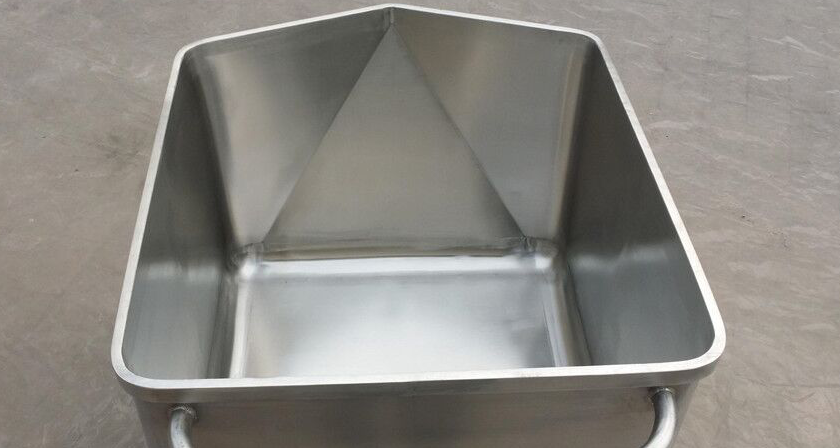
The emphasis on these precise steps ensures a product with an extended service life, typically exceeding 10-15 years with proper maintenance, superior resistance to corrosion, and exceptional hygienic performance across various industries, including food processing, pharmaceuticals, and specialized logistics within the petrochemical and metallurgy sectors where hygienic, durable container111s are also required.
Technical Specifications and Parameters
Our industrial Meat bin solutions are engineered to specific technical parameters to guarantee optimal performance, hygiene, and compatibility with industry-standard equipment. The following table outlines typical specifications:
Standard Meat Bin Specifications
| Parameter | Specification | Notes |
|---|---|---|
| Material Grade | AISI 304 (Standard), AISI 316L (Optional) | 316L recommended for high-chloride/acidic environments |
| Capacity Range | 200 L to 1500 L (Approx. 44-330 US Gallons) | Custom sizes available |
| Dimensions (Typical) | 1200x800x800mm (L x W x H) | Conforms to Euro-pallet standards for logistics |
| Wall Thickness | 2.0mm - 4.0mm (Varies by capacity) | Ensures structural rigidity and impact resistance |
| Surface Finish (Internal) | Ra < 0.8 µm (Food contact grade) | Facilitates cleaning and prevents bacterial adhesion |
| Load Capacity (Static) | Up to 1500 kg (3300 lbs) | Designed for safe stacking and heavy contents |
| Temperature Range | -40°C to +100°C (-40°F to +212°F) | Suitable for freezing, thawing, and cooking processes |
| Drainage Options | Optional perforated bottom or drainage valve | For brining, washing, or liquid separation |
| Certifications | ISO 9001 (Manufacturing), FDA Compliant Materials, HACCP compatible | Ensures adherence to international quality and safety standards |
These specifications underscore the robust engineering and design principles applied to ensure that each Meat bin performs reliably in demanding industrial environments.
Application Scenarios Across Diverse Industries
The versatility and robust design of industrial Meat bin container111s make them indispensable across a multitude of application scenarios, primarily within food processing but also extending to other sectors requiring high hygiene and durability.
- Meat and Poultry Processing: For the collection of raw meat trimmings, offal, and carcasses; ideal for brining, marinating, and chilling operations. Their smooth, crevice-free interiors facilitate quick and thorough cleaning, preventing cross-contamination in high-volume production lines.
- Seafood Processing: Used for holding fresh fish, shellfish, and crustaceans, often with ice, to maintain optimal temperatures. The corrosion resistance of stainless steel is crucial in saline environments.
- Dairy and Food Ingredient Handling: While primarily for meat, these bins are also suitable for bulk ingredients, powders, or semi-liquid products in other food sectors where hygienic transport and storage are critical.
- Logistics and Cold Chain Storage: Engineered to integrate seamlessly with standard pallet jacks, forklifts, and automated conveyor systems, they are essential for efficient material flow within cold storage facilities and for inter-plant transportation. Their stackable design optimizes storage density.
- Pharmaceutical and Chemical Industries: In specific scenarios requiring a non-reactive, easy-to-sanitize container111 for intermediate products or waste, the stainless steel Meat bin offers a robust solution that withstands harsh cleaning agents and maintains product purity.
- Waste Management in Food Production: Securely contains by-products and waste materials, ensuring hygienic removal from processing areas and preventing pest attraction.
Each application leverages the bins' inherent strengths: their capacity for heavy loads, resistance to chemical and physical degradation, and compliance with strict sanitary regulations, contributing to improved operational efficiency and product safety.
Technical Advantages for Enhanced Operations
The design and material science behind our industrial Meat bin solutions deliver distinct technical advantages critical for modern food processing environments:
- Superior Corrosion Resistance: Constructed from AISI 304 or 316L stainless steel, these bins offer exceptional resistance to acids, alkalis, brines, and sanitizing agents commonly used in food processing. This extends service life and maintains aesthetic and functional integrity even in harsh conditions, reducing the frequency of equipment replacement.
- Unmatched Hygiene and Ease of Cleaning: Featuring continuously welded seams, radius corners, and highly polished surfaces (Ra < 0.8 µm), our bins eliminate crevices where bacteria can harbor. This design facilitates rapid and thorough cleaning, significantly reducing sanitation time and resource consumption (energy saving in hot water, chemicals), while ensuring compliance with HACCP and other food safety protocols.
- Robust Structural Integrity: Reinforced rims, heavy-gauge walls, and precisely engineered fork pockets ensure high load-bearing capacity and impact resistance. This translates to fewer damages, safer handling of heavy loads (up to 1500 kg), and prolonged equipment lifespan, even under intensive use in industrial settings.
- Thermal Stability: Capable of withstanding extreme temperature fluctuations from -40°C to +100°C, making them suitable for processes involving freezing, thawing, cooking, and hot washdowns without material degradation or structural compromise.
- Operational Versatility: Designed for seamless integration with automated handling systems, conveyors, and various lifting equipment, enhancing operational efficiency and reducing manual labor. Stackable designs optimize vertical storage space in cold rooms and warehouses.
- Compliance with Global Standards: Manufactured in facilities certified to ISO 9001 and utilizing materials compliant with FDA regulations, our bins provide assurance of quality and safety for international markets.
These advantages collectively contribute to a lower total cost of ownership by reducing maintenance, sanitation, and replacement expenses, while simultaneously elevating food safety standards and operational efficiency.
Vendor Comparison: Choosing the Right Meat Bin Supplier
Selecting the optimal Meat bin supplier requires a comprehensive evaluation beyond just initial cost. Key factors include material quality, manufacturing precision, customization capabilities, and after-sales support. Below is a comparative analysis:
Comparative Analysis of Industrial Meat Bin Suppliers
| Feature | Bossin Machinery | Competitor A (e.g., Generic Brand) | Competitor B (e.g., Premium Niche) |
|---|---|---|---|
| Material Traceability | Full MTCs (EN 10204 3.1) provided for all stainless steel. | Limited or no MTCs, generic material claims. | Full MTCs provided, sometimes with proprietary alloys. |
| Welding Quality & Finish | Continuous TIG welds, Ra < 0.8 µm polished food-grade finish. Radius corners. | Intermittent or less precise welds, rougher finish, sharp internal corners. | Excellent TIG welds, often electropolished to Ra < 0.4 µm. |
| Customization Options | High flexibility for dimensions, features (lids, drains, casters, labels). | Standard sizes only, limited modifications. | Good customization, but often at a higher premium. |
| Certifications | ISO 9001 manufacturing, FDA compliant materials, HACCP compatible. | Basic CE compliance, sometimes self-declared. | Typically full suite of international food safety certifications. |
| Price Point | Competitive pricing for superior quality and customization. Strong value. | Lower initial cost, but higher lifecycle costs due to durability/hygiene issues. | Highest price point, often targeting highly specialized niche applications. |
| Service & Support | Dedicated project management, comprehensive warranty, global shipping. | Minimal post-sale support, often through distributors. | Excellent, personalized service and support. |
Bossin Machinery differentiates itself by offering a robust balance of high-quality materials, precision manufacturing, extensive customization, and reliable support at a competitive price, ensuring superior value and long-term performance for our clients.
Customized Solutions for Unique Operational Demands
Recognizing that every processing facility has unique operational footprints and specific challenges, we specialize in providing customized Meat bin solutions. Our engineering team works closely with clients to tailor bins that perfectly align with their workflow, equipment, and hygienic requirements.
Customization options include, but are not limited to:
- Dimension and Capacity Modifications: Bins can be designed to specific lengths, widths, and heights to fit existing conveyor systems, racking, or processing machinery, optimizing space utilization and integration.
- Material Grade Selection: While AISI 304 is standard, AISI 316L or other specialized alloys can be utilized for enhanced resistance against specific corrosive agents (e.g., high-salt brines, strong acids) prevalent in certain processing environments.
- Drainage and Perforation: Options for integrated drainage valves, perforated bottoms for liquid separation, or specific hole patterns for washing and rinsing processes.
- Lids and Covers: Custom-fitted lids, including hinged, removable, or sealed versions, to protect contents from contamination during transport or storage.
- Mobility Solutions: Integration of heavy-duty casters (swivel, fixed, or braking) for easy maneuverability within the plant, or specialized base designs for robotic handling systems.
- Identification and Tracking: Custom etching, numbering, or barcode holders for efficient inventory management and HACCP traceability.
- Specialized Reinforcements: Additional reinforcement features for extremely heavy loads, frequent stacking, or high-impact environments.
Our collaborative design process ensures that each custom Meat bin not only meets functional requirements but also adheres to the highest standards of hygiene and durability, providing a tailored solution that enhances operational efficiency and product safety.
Application Case Studies
Our commitment to delivering high-performance Meat bin solutions is best exemplified by the success of our clients. Below are illustrative case studies showcasing our impact:
Case Study 1: Large-Scale Poultry Processor – Enhanced Hygiene and Automation
Client: A major poultry processing plant seeking to upgrade its primary raw material handling system to meet stricter internal hygiene standards and integrate with a new automated sorting line.
Challenge: Their existing plastic bins were showing signs of wear, were difficult to thoroughly sanitize, and frequently caused jams in the new automated system due to inconsistent dimensions and structural integrity issues.
Solution: We supplied 500 custom-designed 800L stainless steel Meat bin units (AISI 304), featuring an electropolished finish (Ra < 0.4 µm), reinforced bases for robotic grippers, and precision dimensions guaranteed within +/- 1mm for seamless automated integration. Each bin included laser-etched unique identifiers for enhanced traceability.
Results: The client reported a 40% reduction in sanitation time due to the superior finish and design, eliminating cross-contamination risks. The consistent dimensions and robust construction led to zero jams in the automated sorting line, improving throughput by 15%. The longevity and hygiene compliance of the new bins resulted in significant operational savings and improved product safety ratings.
Case Study 2: Boutique Artisan Butcher – Optimized Brining Process
Client: A specialized butcher producing gourmet cured meats, requiring a highly corrosive-resistant solution for long-term brining of pork bellies and hams.
Challenge: Previous standard stainless steel container111s showed signs of pitting corrosion from prolonged exposure to high-salt brines, leading to product loss and premature equipment failure. They also needed an integrated drainage solution.
Solution: We provided 20 customized 400L Meat bin units fabricated entirely from AISI 316L stainless steel for superior corrosion resistance. Each bin was equipped with a robust, food-grade ball valve at the base for efficient brine drainage and a heavy-duty perforated false bottom to keep products submerged while allowing liquid circulation.
Results: After two years of continuous use, the 316L bins showed no signs of corrosion, eliminating product contamination and extending equipment life significantly. The integrated drainage system streamlined the brining process, reducing manual handling and improving overall efficiency by 20%. The client noted enhanced product quality and consistency.
Trust and Support: FAQs, Lead Time, Warranty, and Customer Service
Frequently Asked Questions (FAQs)
- Q: What is the typical lead time for a standard Meat bin order?
A: For standard configurations, lead time is typically 3-5 weeks from order confirmation. Custom orders may require 6-8 weeks, depending on complexity and material availability.
- Q: Are your Meat bins stackable? What is the maximum safe stack height?
A: Yes, all our industrial Meat bin units are designed for safe stacking. The maximum safe stack height depends on the bin's capacity and load, but typically, bins loaded to capacity can be safely stacked 3-4 high. Detailed stacking guidelines are provided with each order.
- Q: Can I get a Meat bin with specific drainage requirements?
A: Absolutely. We offer various drainage options, including integrated ball valves, perforated bottoms, or custom-designed solutions to suit your specific process (e.g., brining, washing, liquid separation). Please discuss your needs with our sales team.
- Q: What are the cleaning recommendations for your Meat bins?
A: Our stainless steel bins are designed for easy cleaning. We recommend using standard food-grade detergents and sanitizers. High-pressure washing and steam cleaning are also safe. Avoid abrasive cleaners or steel wool that can damage the passive layer. Regular cleaning prolongs service life and maintains hygiene.
Lead Time & Fulfillment
We understand the critical importance of timely delivery in industrial operations. Our robust supply chain and efficient manufacturing processes enable us to offer competitive lead times. Standard orders for Meat bin units are typically fulfilled within 3-5 weeks. For custom solutions or large-volume orders, we provide a detailed production schedule and work closely with clients to meet their project timelines, including options for expedited shipping if required.
Warranty Commitments
Bossin Machinery stands behind the quality and durability of our products. All our industrial Meat bin units come with a comprehensive 5-year warranty against manufacturing defects in materials and workmanship. This warranty underscores our confidence in the longevity and performance of our stainless steel solutions, providing peace of mind for our customers.
Dedicated Customer Support
Our commitment extends beyond delivery. We offer dedicated after-sales support to ensure optimal performance throughout the product's lifespan. Our team of technical experts is available to assist with any queries regarding installation, maintenance, or operational best practices. You can reach our support team via phone, email, or through our website's contact form during business hours.
References
- Food and Drug Administration (FDA) – Code of Federal Regulations, Title 21.
[Accessed via fda.gov] - International Organization for Standardization (ISO) – ISO 9001: Quality Management Systems.
[Accessed via iso.org] - Hazard Analysis and Critical Control Points (HACCP) – Principles and Application Guidelines.
[Accessed via fda.gov] - World Health Organization (WHO) – Food Safety Guidelines.
[Accessed via who.int] - European Committee for Standardization (CEN) – EN 10204: Metallic products - Types of inspection documents.
[Accessed via cencenelec.eu]
Latest news
-
Comprehensive Guide to Wholesale Skip Car Solutions for Construction Efficiency
NewsMar.31,2026
-
Investing in a Wholesale Meat Salted Machine for Business Success
NewsMar.28,2026
-
Revolutionizing Burger Production with Wholesale Burger Making Forming Machine Solutions
NewsMar.26,2026
-
Comprehensive Guide to Wholesale Sausage Filler Price and Equipment Selection
NewsMar.24,2026
-
Investing in a Wholesale Beef Slicing Machine for Enhanced Business Efficiency
NewsMar.21,2026
-
Invest in a Wholesale Clipping Machine for Sausages to Optimize Production
NewsMar.19,2026