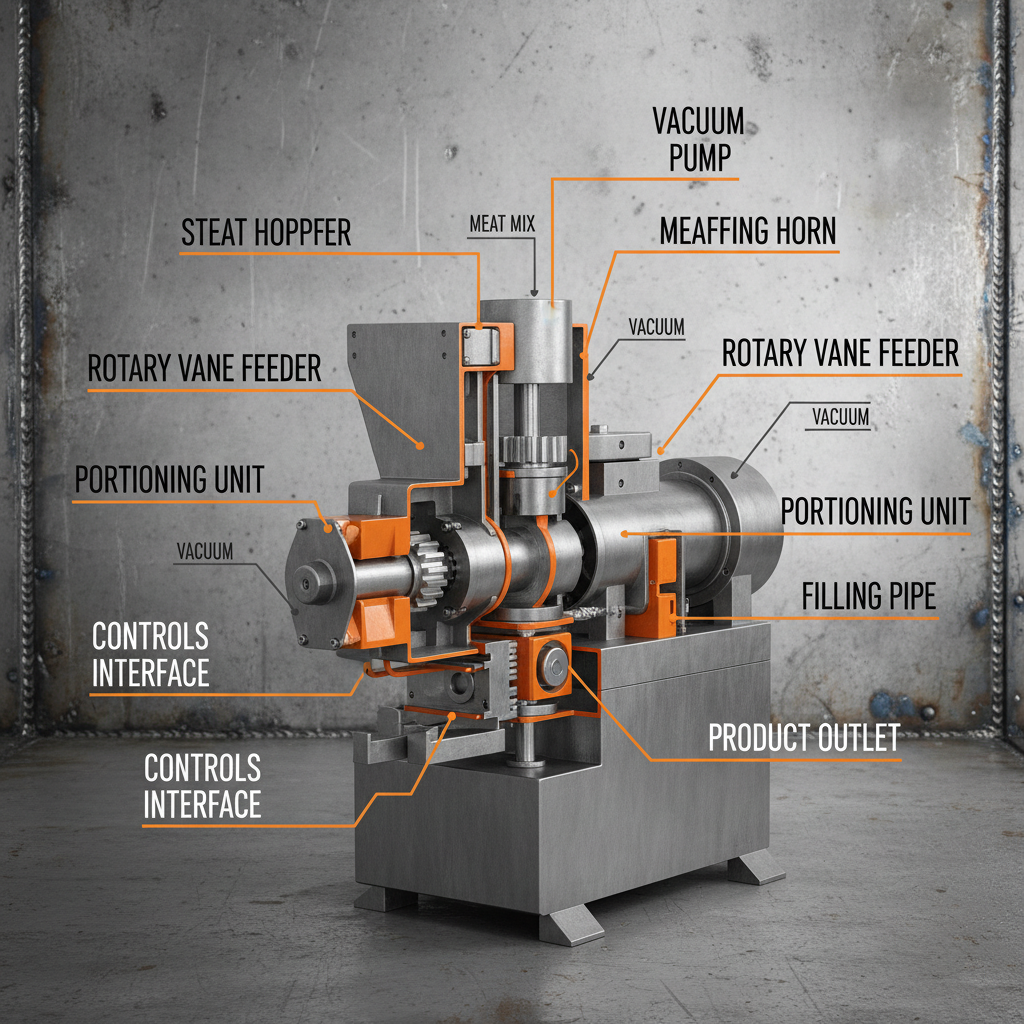
Honestly, the whole sausages making machine game has gotten wild. Used to be, you'd see the same old setups everywhere. But now? Everybody wants faster, cleaner, more… something. The demand's just exploded, driven by folks wanting processed meats but also wanting, you know, a bit more control over what goes in them. It’s not just the big processing plants anymore; smaller butchers, even restaurants, are getting into it. And let me tell you, the pressure is on to deliver.
It’s funny, though. You spend enough time on these sites – and I’ve spent years – and you see the same mistakes happen over and over. People getting caught up in the bells and whistles and forgetting the basics. They’ll spec out some fancy stainless steel thingamajig, but then skimp on the motor. Or design a hopper that looks great on paper but clogs up with the first batch of ground pork. Have you noticed? It’s always the simple things that trip people up.
The whole chain, really. From raw material in, to the finished product out. That's what's got everyone scrambling.
The Current Landscape of Sausages Making Machines
Honestly, the biggest trend I'm seeing is towards automation and hygiene. Everybody wants to minimize human contact, especially with all the food safety regulations. Stainless steel is king, naturally, but even then, the grade of stainless is crucial. You get the cheap stuff, and it’ll start pitting and corroding faster than you can say “salmonella.” It's a surprisingly big deal.
And it’s not just the big industrial machines, either. There’s a growing market for smaller, countertop models for butchers and delis. They want something that can handle a few hundred pounds a day, not ten tons. Which means smaller footprint, easier cleaning… different design considerations altogether.
Common Pitfalls in Sausages Making Machine Design
Strangely, a lot of designers – good engineers, mind you – they just don’t spend enough time watching these machines run. They design for optimal throughput on a perfect day. But what happens when the meat’s a little warmer than it should be? What happens when a bone sneaks into the grinder? That's when things go south. I encountered this at a factory in Wenzhou last time; beautiful machine, top of the line, but the bone detector was way too sensitive and kept shutting down production.
Another one? The stuffing nozzles. People underestimate how much pressure that builds up. You get a poorly designed nozzle, and it’ll split, spraying meat everywhere. Not fun for the operator, not good for hygiene, and a massive waste of product. It's the little details, I tell ya.
And don’t even get me started on the cleaning process. If you can’t disassemble and clean every part of the machine in under an hour, you’ve got a problem. Nobody wants to spend half their day scrubbing meat residue off gears.
Materials Matter: A Hands-On Perspective
Look, stainless steel is the standard, for good reason. But there are different grades, and they all feel different. 304 is good for most things, but if you’re dealing with acidic ingredients, you need 316. It’s more corrosion-resistant, and you can tell just by looking at it – it’s a bit brighter, smoother.
The polymers used for the casings and seals? Equally important. You want something that’s food-grade, obviously, but also durable and resistant to abrasion. I’ve seen too many machines where the seals wear out after only a few weeks. And the smell! Some of those cheaper polymers have a real… chemical odor. You want something neutral, something that won’t impart any flavor to the product.
And the motors! You can feel a good motor. It's solid, heavy. It doesn't vibrate like crazy. The cheap ones… well, you can tell. They sound like they’re about to fall apart. Anyway, I think a good motor is the heart of the whole operation.
Real-World Testing: Beyond the Lab
Lab testing is fine, sure. But it doesn’t tell you anything about how a machine will actually perform on a busy production line. You need to put it through the wringer. Run it for 12 hours straight, with different types of meat, different levels of fat content, different grinding plate sizes. See how it handles it.
And don’t just test it with perfect meat, either. Throw in some gristle, some bone chips, some… stuff you find. Because that's what it’s going to encounter in the real world. You need to see how the machine handles those situations. That’s when you find out what’s really built to last.
Sausages Making Machine Performance Metrics
How Users Actually Use Sausages Making Machines
You know, it’s never what you expect. Designers think people are going to follow the manual, meticulously cleaning and lubricating everything after each use. But in reality? They just want to get the job done and move on. That’s why durability and ease of cleaning are so important.
They also tend to push these machines harder than they’re rated for. They’ll overload the hopper, run it continuously for longer than recommended… They're trying to maximize production, and they don't always understand the consequences.
Advantages and Disadvantages: The Honest Truth
The advantages are obvious: speed, consistency, hygiene. A good sausages making machine can produce hundreds of pounds of product per hour, with a level of quality and uniformity that’s impossible to achieve by hand. That's a huge boost to productivity.
But they’re expensive, that’s the downside. And they require skilled operators. You can’t just throw anyone in front of one and expect them to produce quality product. And if something breaks down – and something will break down eventually – you need to have a qualified technician on hand to fix it. It's a long-term investment, that's for sure.
Plus, some of the newer machines… they’re just over-engineered. Too many bells and whistles, too much complexity. It makes them harder to troubleshoot and more expensive to maintain.
Customization and Specific Applications
I'm a big believer in customization. One size doesn’t fit all. Last month, that small boss in Shenzhen who makes smart home devices insisted on changing the interface to . Said he wanted to standardize on one connector for all his equipment. Seemed a little pointless to me, but hey, it was his money. The point is, we were able to accommodate his request.
We've also done custom hopper designs for different types of meat, different grinding plate configurations for different textures, and even customized stuffing nozzles for different casing sizes. It's all doable. The key is to communicate with the customer upfront and understand their specific needs.
It also depends on the scale. A small butcher shop has vastly different needs than a large-scale processing plant.
Key Performance Indicators for Sausages Making Machine Evaluation
| Application Scenario |
Material Composition |
Operational Efficiency |
Maintenance Requirements |
| Small Butcher Shop |
304 Stainless Steel, Food-Grade Polymers |
Medium (100-300 lbs/day) |
Simple Disassembly, Weekly Cleaning |
| Medium-Sized Deli |
316 Stainless Steel, High-Durability Seals |
High (300-600 lbs/day) |
Scheduled Maintenance, Lubrication |
| Large Processing Plant |
Reinforced 316 Stainless Steel, Industrial-Grade Components |
Very High (1-5 tons/day) |
Complex Maintenance, Specialized Technicians |
| Restaurant (In-House Sausage Production) |
Compact Stainless Steel, Easy-Clean Surfaces |
Low-Medium (50-150 lbs/day) |
Daily Cleaning, Minimal Maintenance |
| Specialty Meat Producer (Organic, Gluten-Free) |
Certified Food-Grade Materials, Traceability Features |
Medium (150-300 lbs/day) |
Strict Sanitation Protocols, Detailed Record-Keeping |
| Mobile Food Truck (Sausage Production) |
Lightweight Stainless Steel, Vibration-Resistant Design |
Low (25-75 lbs/day) |
Quick Disassembly, Portable Cleaning System |
FAQS
Honestly, it depends on how well it's maintained, and how hard it’s pushed. A well-built machine, used reasonably, should last 10-15 years without major issues. But neglect it, overload it, and you'll be looking at repairs much sooner. It's like a truck, really. Treat it right, and it'll keep on trucking. It also depends on the quality of the initial build—cheaper machines will simply break down faster.
Crucially important. 304 is standard, good for general use. But if you’re processing anything acidic – like sausages with a lot of vinegar or citrus – you need 316. It's far more resistant to corrosion. I’ve seen machines where the stainless steel started pitting and contaminating the product within a year because they skimped on the grade. It’s not worth the risk.
The stuffing nozzles, without a doubt. They get clogged, they crack, they’re just a pain. Regular cleaning is key, obviously, but even with that, you’ll eventually need to replace them. And the bearings on the grinder… those need regular lubrication. A squeaky bearing is a sign of trouble, and ignoring it will lead to a much bigger (and more expensive) problem.
Most can, but it depends on the stuffing mechanism. Some machines are better suited for natural casings, while others are designed for collagen or cellulose casings. The nozzle size and pressure settings will need to be adjusted accordingly. You can’t just throw any casing on there and expect it to work. You also want to consider if a change in casings will require a different attachment piece.
Emergency stop buttons are a must, obviously. Guards over moving parts are essential. And a proper interlock system to prevent the machine from running if the guards are open. You also want to make sure the electrical components are properly grounded and protected. Safety shouldn't be an afterthought; it should be built in from the start. And proper training for operators is non-negotiable.
It varies a lot, depending on the complexity of the customization. Simple changes, like a different nozzle size, might only take a week or two. But more significant modifications – like a custom hopper design or a different control system – could take 6-8 weeks, or even longer. It's best to plan ahead and get your order in as early as possible.
Conclusion
So, where does that leave us? Sausages making machines are getting more sophisticated, more automated, and more focused on hygiene. The key is to understand your specific needs, choose a machine that’s built to last, and invest in proper maintenance. Don’t get caught up in the hype; focus on the fundamentals.
Ultimately, whether this thing works or not, the worker will know the moment he tightens the screw. If it feels solid, if it runs smoothly, if it’s easy to clean… then you’ve got a good machine. And that’s all that really matters.