
Oct . 28, 2025 14:50 Back to list
Timing Pulley Manufacturer – Precision Machined, Custom OEM
What a Good Timing Pulley Can Do for a Line (And Why People Overlook It)
The humble Timing Pulley rarely gets a headline, but spend a day on a packaging floor and you’ll see why maintenance teams obsess over it. In a German vacuum filler, a robot cell, or a 3D printer farm—it keeps motion honest, synchronized, and repeatable. I’ve stood next to lines where a slightly off-spec pulley meant micro-slips that became macro-downtime. Not glamorous, but very real.
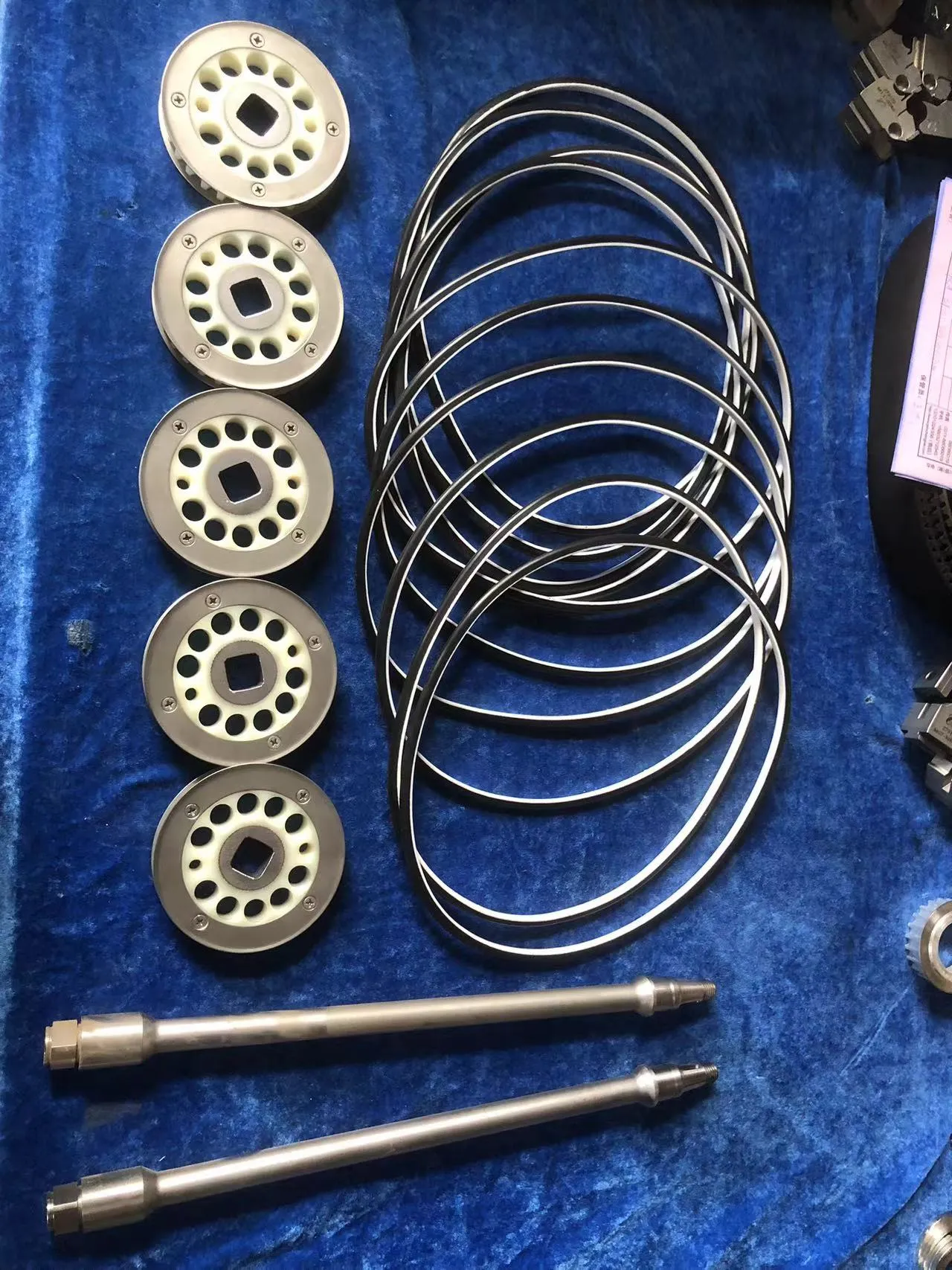
Industry trends I keep seeing
- Lighter, stiffer alloys with hard anodizing for food lines; antimicrobial finishes are getting popular.
- Shift from trapezoidal to HTD/GT profiles for higher torque and quieter meshing.
- More balancing (G6.3 ≈ standard) as speeds go up on modern fillers and pick-and-place rigs.
- Traceability—QR-coded lots and COC/ROHS/REACH docs as a given, not a bonus.
Product snapshot (real-world use may vary)
| Profiles | HTD 3M/5M/8M, T5/T10, AT5/AT10, GT2/GT3 |
| Materials | Al 6061‑T6 / 7075‑T6; Steel 45# (≈AISI 1045); Stainless 304/316 |
| Bore/Hub | Pilot bore, keyed, taper‑lock, custom clamping hubs |
| Tooth count | 12–120 (custom outside on request) |
| Surface finish | Ra ≈ 1.6 µm; hard anodize per ISO 7599; passivation for SS |
| Runout & concentricity | ≤ 0.03 mm typical (CNC + CMM verified) |
| Balance grade | ISO 21940 G6.3 (higher on request) |
| Operating temp | -20 to 120 °C (coating dependent) |
| Certs | ISO 9001, RoHS, REACH; food-contact advisory on request |
Process flow (how these parts earn trust)
Materials incoming with heat certs → CNC turning and hobbing/tooth shaping → broaching/keying → deburr + edge rounding (important, actually) → hard anodize or nitriding (profile-protect fixturing) → 100% runout check → CMM tooth verification (ISO 5294 geometry) → balance test (ISO 21940) → salt‑spray sample test per ASTM B117 → lot‑level serialization. Typical service life: 10,000–20,000 h in clean, aligned drives; in vacuum fillers, I’ve seen customers report ≈18 months continuous duty before scheduled swap.
Where they go to work
- German vacuum filler spare parts for meat/cheese lines (washdown-aware finishes).
- Cartoners, form-fill-seal, and checkweighers that live and die by timing.
- Robotics, gantries, CNC accessories, lab automation, and 3D printers.
Origin and support hub: No.311 Youyi North Street, Xinhua District, Shijiazhuang City, Hebei, China.
Vendor comparison (field-notes, not theory)
| Vendor | Profile accuracy | Food-grade finish | Lead time | Customization | Traceability |
|---|---|---|---|---|---|
| Bossin Machinery (Timing Pulley) | CMM-verified (ISO 5294) | Hard anodize / SS options | ≈ 10–20 days | Drawings, one-offs to batches | Lot QR + COC |
| Local Machinist | Good, varies by shop | Limited coatings | Fast for small qty | Moderate | Partial |
| Online Marketplace | Inconsistent | Unclear | Stock dependent | Limited | Rare |
Customization and proofs
Options: custom tooth counts, flanged pulleys, special bores, food-grade seals, anti-backlash idlers, laser marking. Test data I’ve seen: ≤0.02 mm average runout on 5M pulleys, 96 h neutral salt-spray on anodized Al (ASTM B117), and vibration reduced ≈15% after dynamic balancing upgrade.
Mini case study
A mid-size German vacuum filler line swapped in Timing Pulley sets with hard anodized 6061 and keyed bores. Result: torque transfer improved (no polish wear on teeth after 9 months), changeover time down 12%, and unplanned stops cut by 18%. Maintenance lead told me, “It seems minor until you stop chasing belt dust every week.”
Standards that actually matter
- ISO 5294 (Synchronous belt drive pulleys – geometry/tolerances)
- ISO 21940 (Balance quality) – G6.3 is a practical sweet spot
- ISO 7599 (Anodizing), ASTM B117 (salt spray), ISO 4287 (surface roughness)
- RoHS/REACH for substance compliance in food/medical-adjacent kit
Citations:
1) ISO 5294 — Synchronous belt drives — Pulleys
2) ISO 21940 — Mechanical vibration — Rotor balancing
3) ISO 7599 — Anodizing of aluminum and its alloys
4) ASTM B117 — Standard Practice for Operating Salt Spray (Fog) Apparatus
Latest news
-
Comprehensive Guide to Wholesale Skip Car Solutions for Construction Efficiency
NewsMar.31,2026
-
Investing in a Wholesale Meat Salted Machine for Business Success
NewsMar.28,2026
-
Revolutionizing Burger Production with Wholesale Burger Making Forming Machine Solutions
NewsMar.26,2026
-
Comprehensive Guide to Wholesale Sausage Filler Price and Equipment Selection
NewsMar.24,2026
-
Investing in a Wholesale Beef Slicing Machine for Enhanced Business Efficiency
NewsMar.21,2026
-
Invest in a Wholesale Clipping Machine for Sausages to Optimize Production
NewsMar.19,2026