
Oct . 06, 2025 10:15 Back to list
Vacuum tumber PLC controled: Higher Yield, Smart Control?
Vacuum tumber PLC controled: insider notes from the plant floor
If you’ve ever watched a good meat line on a Monday morning, you’ll know the rhythm: brine in, drum on, vacuum tight, yield up. The Vacuum tumber PLC controled coming out of Shijiazhuang (No.311 Youyi North Street, Xinhua District, Hebei, China) is one of those quietly capable machines that processors keep around because, frankly, it just does the job. Touchscreen recipes, predictable vacuum, and a drum that doesn’t complain when you push a long shift—these are the basics, executed well.
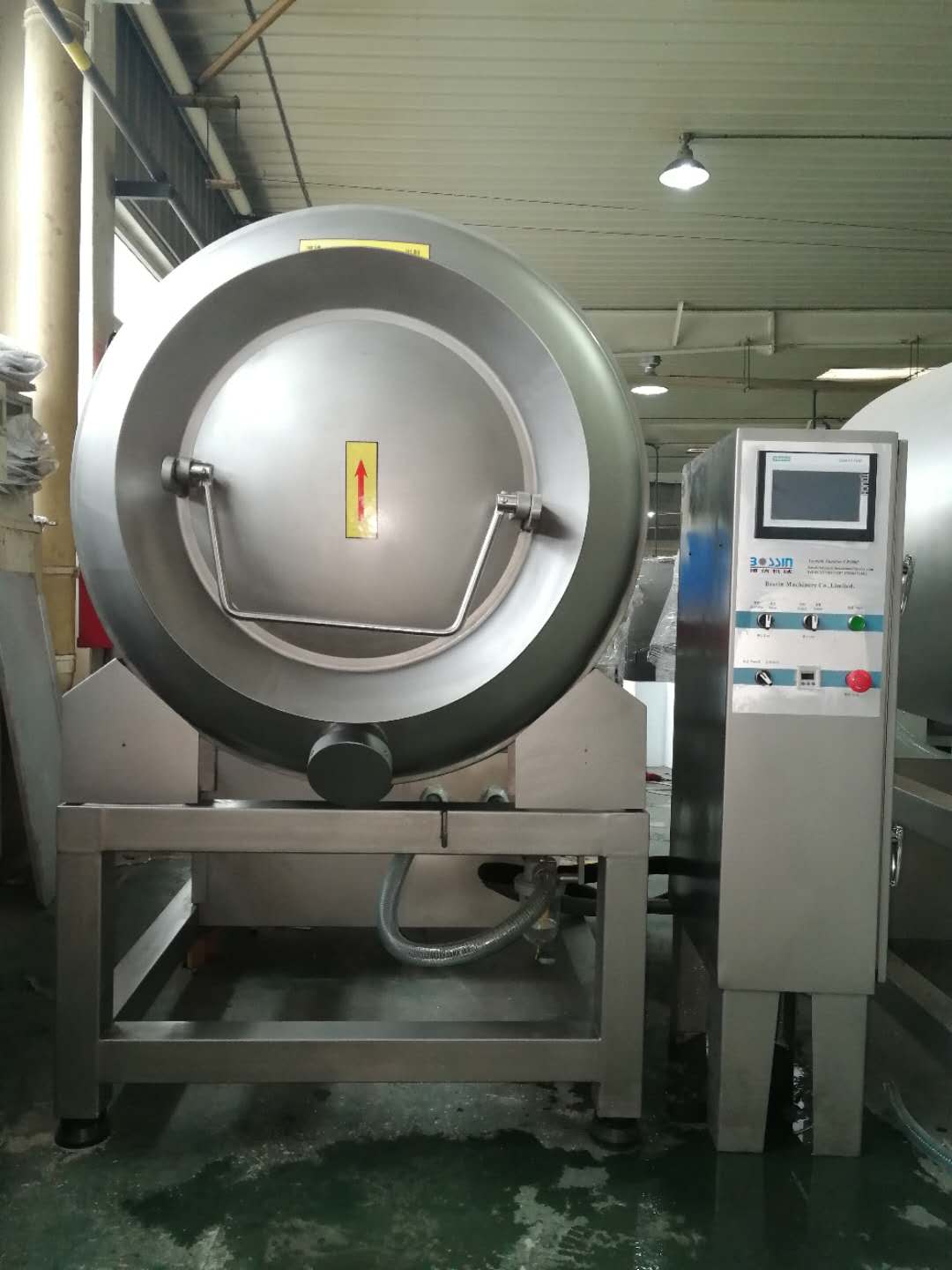
What’s trending in protein tumbling
Three currents are shaping the category: smarter PLC control (recipe memory, event logs), hygiene-first builds (smooth welds, easy CIP), and measurable yield gains for poultry, bacon, seafood, and even plant-based proteins. Actually, many customers say the win is consistency—less operator art, more repeatable science.
Key specifications (real-world values)
| Parameter | Typical value (≈) | Notes |
|---|---|---|
| Drum capacities | 300 / 600 / 1000 / 2000 L | Fill rate ~35–60% by product |
| Material | SUS304 (optional 316L) | 3–5 mm drum wall, bead-blasted |
| Vacuum range | -0.08 to -0.09 MPa | Stable under continuous duty |
| Speed / mode | 2–12 rpm, forward/reverse | Programmable intervals, rest |
| PLC + HMI | Touchscreen 7–10" | Recipe memory ≈50–100 sets |
| Noise | ≤70 dB(A) | Measured 1 m from drive side |
| Power | 3Φ 380V/50Hz (options) | VFD-controlled motor |

Process flow, methods, and testing
- Materials: food-grade SUS304 contact surfaces; silicone gaskets; food-safe lubricants.
- Methods: vacuum marination and mechanical massaging; programmable tumble/rest cycles; optional chill hold between steps.
- Testing standards: food safety programs per ISO 22000/HACCP; electrical per CE/GB; surface roughness typically ≤Ra 0.8 μm.
- Service life: ≈8–12 years with seal changes every 12–18 months (use may vary).
- Industries: poultry (breast, wings), pork (bacon, ham), beef trims, seafood (fillets), plant-based analogs.
Vendor snapshot and comparison
| Criteria | Bossin Vacuum tumber PLC controled | Typical alt. vendor |
|---|---|---|
| Origin | Shijiazhuang, Hebei, China | EU/US/Other Asia |
| Yield impact | +2–4% brine retention (≈) | +1–3% (varies) |
| PLC usability | Touch recipes, event logs | Basic timers in entry models |
| Maintenance | Common seals/bearings | Proprietary parts (sometimes) |
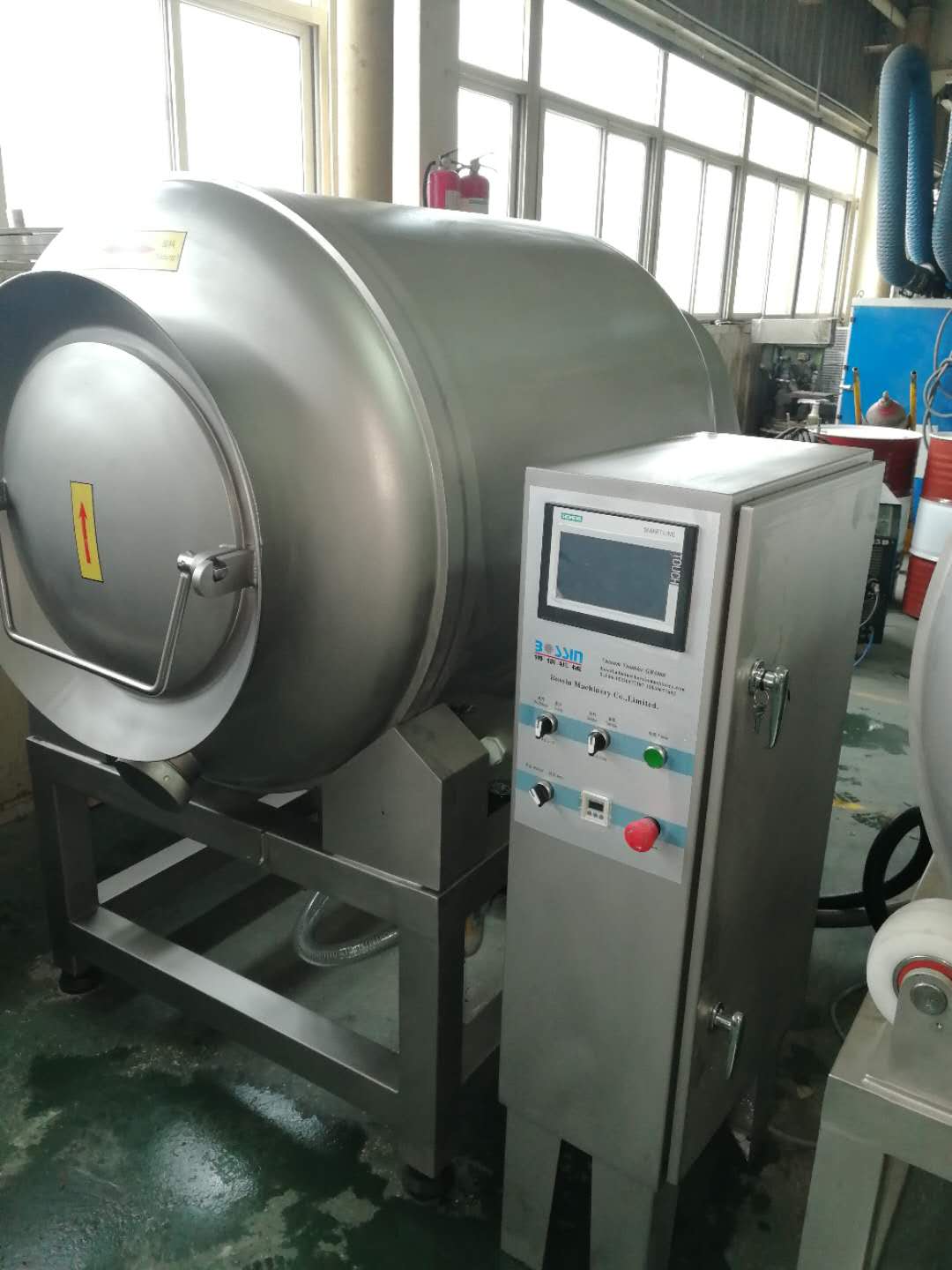
Field data and feedback
In one mid-sized poultry plant, a 600 L unit delivered +3.1% average pick-up and 18% lower shear force (Warner–Bratzler) after a 55-minute cycle at 6 rpm, -0.085 MPa. To be honest, the surprise was the noise—operators reported “quieter than the old drum,” measured ≈68 dB nearby. Customer notes: “touchscreen recipes save time” and “seals lasted a full season.”
Compliance and certifications
Built to support HACCP programs and ISO 22000 environments; CE-conformant electricals; hygienic-design practices influenced by EHEDG/GB. HMI is typically IP65; emergency stop and overload protections are standard. Documentation packs usually include wiring schematics, material certificates, and FAT checklists.
Customization options
- Capacities: 300–2000 L; paddle geometry tuned for poultry vs. red meat.
- Recipe logic: multi-step tumble/rest/vacuum holds; password levels.
- CIP spray ball, drain sizing, casters vs. fixed feet; 316L upgrade for briny seafood.
- Power standards: 220/380/415/480V; 50/60 Hz.
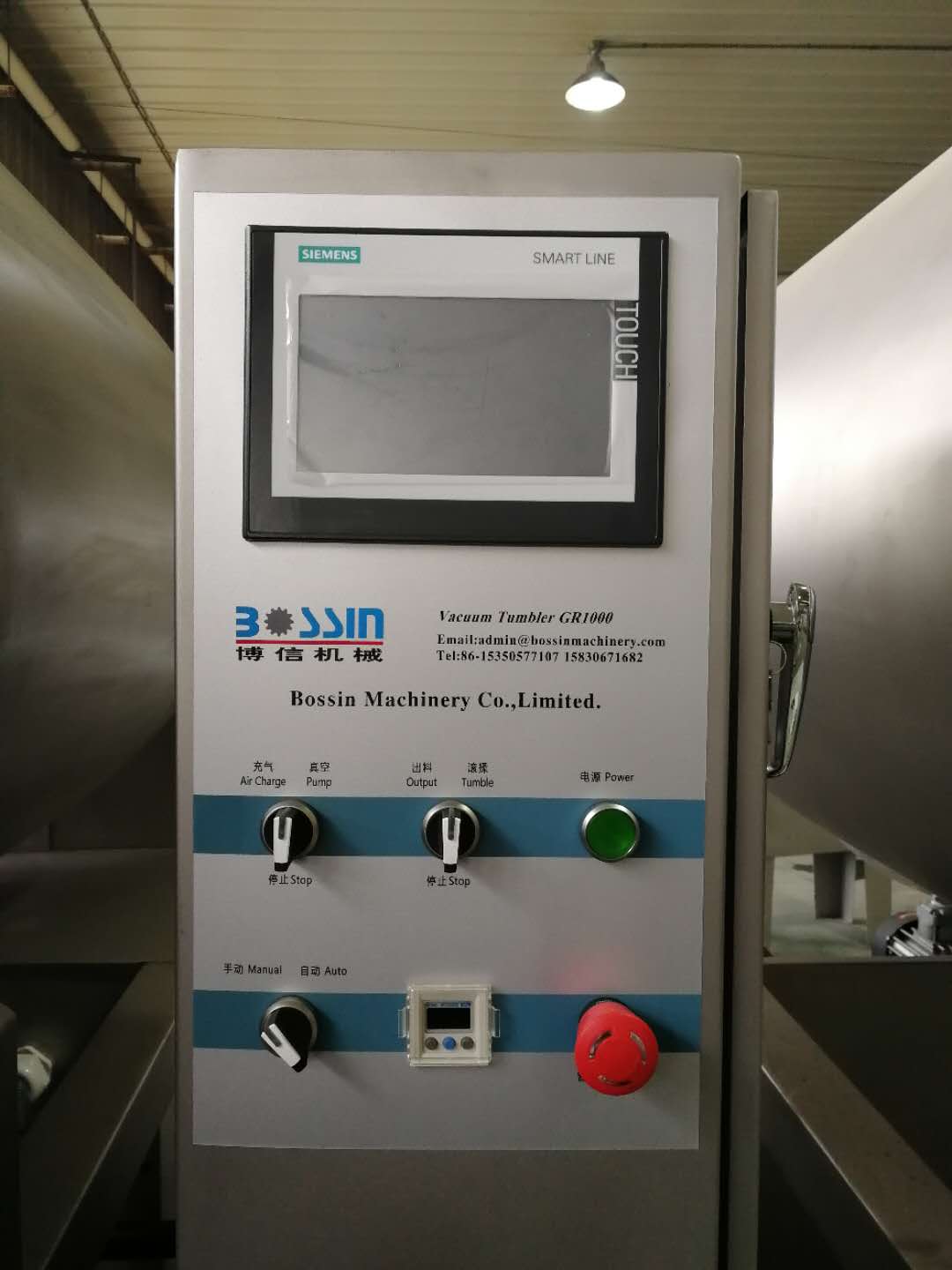
Bottom line? The Vacuum tumber PLC controled fits the “practical workhorse” slot—smart enough to lock in repeatability, tough enough for double shifts, and priced so QA and finance both nod. Not flashy, just effective.
Authoritative citations
- ISO 22000:2018 Food safety management systems.
- Codex Alimentarius HACCP Principles and Application Guidelines.
- EU Machinery Directive 2006/42/EC and CE marking guidance.
- EHEDG Guidelines for Hygienic Design of Equipment.
- GB 16798-1997 Hygienic Design of Equipment for Food Industry (China).
Latest news
-
Comprehensive Guide to Wholesale Skip Car Solutions for Construction Efficiency
NewsMar.31,2026
-
Investing in a Wholesale Meat Salted Machine for Business Success
NewsMar.28,2026
-
Revolutionizing Burger Production with Wholesale Burger Making Forming Machine Solutions
NewsMar.26,2026
-
Comprehensive Guide to Wholesale Sausage Filler Price and Equipment Selection
NewsMar.24,2026
-
Investing in a Wholesale Beef Slicing Machine for Enhanced Business Efficiency
NewsMar.21,2026
-
Invest in a Wholesale Clipping Machine for Sausages to Optimize Production
NewsMar.19,2026