
Oct . 02, 2025 14:45 Back to list
Want a Food-Grade, Stackable, Leakproof Meat Bin?
The quiet workhorse of hygienic handling: why processors still bet on stainless buggies
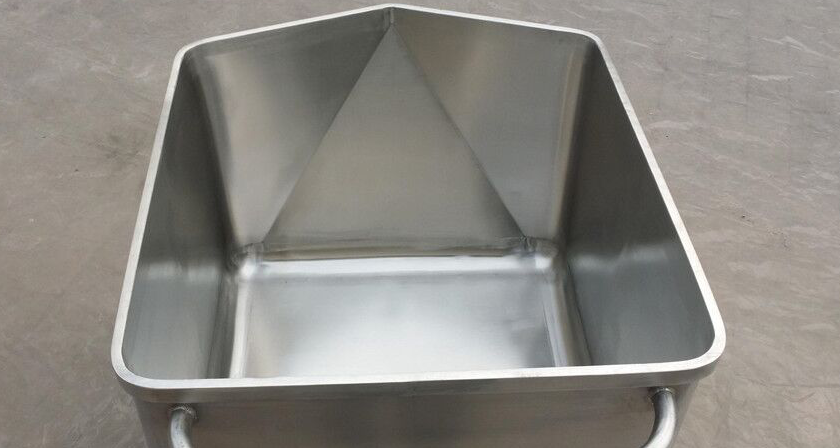
If you run a boning room or a high-care line, you already know the unsung hero isn’t the slicer or the smoker—it’s the Meat bin. To be honest, it sounds almost too simple: a square stainless trolley with casters, a drain, and a good weld. But that’s exactly why it wins. In fact, many customers say a rugged buggy does more for uptime than any flashy gadget.
From my recent visits to plants in Hebei and the Midwest, it seems the modern Meat bin has evolved: tighter seams, smoother radii, smarter casters, and audit-ready documentation. And yet, the promise stays the same—move product safely, cleanly, and predictably.
At a glance: spec snapshot
| Nominal capacity | ≈ 200 L (around 530×530×700 mm internal) |
| Material | SUS304 (optional SUS316 for high-salinity or pharma) |
| Wall thickness | ≈ 2.0 mm single-wall, reinforced rim |
| Finish | Mechanical polish + passivation; Ra ≈ 0.8–1.2 μm (real-world use may vary) |
| Casters | Ø150 mm PU/Nylon, dual fixed + dual swivel; optional anti-static wheels |
| Drainage | Welded drain boss with removable plug |
| Service life | 8–12 years typical with routine sanitization |
Where it fits
Use the Meat bin across chilled cutting rooms, sausage and burger molding, poultry deboning, seafood brining, pet-food batching, and even clean-room adjacent pharma staging. It’s also fine for bakery dough waste and ingredient shuttling—yes, versatility sells.
Manufacturing and QC: what matters (and what often gets missed)
- Materials: Certified SUS304/316 per ASTM A240 with heat-batch traceability.
- Methods: TIG welding on seams, full penetration at corners, blended welds, passivation to ASTM A967; optional electropolish.
- Testing: Dye penetrant on critical welds (ISO 3452), load test to 500 kg, stability/tip test at 12° incline, caster roll test 5 km, salt-spray 200 h (ASTM B117) with no red rust on base material.
- Hygiene: Design meets EN 1672-2 hygienic requirements; compatible with HACCP and ISO 22000 programs.
Real-world plant feedback? One QA manager told me their older carts pooled brine under the rim; the updated Meat bin geometry with larger internal radius drained 30% faster post-wash. Small tweak, big win.
Advantages you can feel on the floor
- Cleaner washdown: fewer bug traps, smoother seams.
- Operator safety: balanced push height, rounded rim, predictable tracking.
- Lifecycle ROI: lower wheel replacement and fewer weld failures over 5+ years.
Customization options
Color-coded handles, laser-etched lot IDs, RFID/QR asset tags, 316L upgrade, high-temp casters, drains on left/right, and cosmetic polish grades. If you’re audit-heavy, spec certificate packs (material certs, weld maps, and PPAP-lite) and you’ll thank yourself later.
Vendor comparison (indicative)
| Vendor | Material | Capacity/Load | Finish | Lead time | Certs | Price (USD) |
|---|---|---|---|---|---|---|
| Bossin Machinery (Hebei) | SUS304/316 | 200 L / 500 kg | Polish + passivation | 3–5 weeks | ISO 9001, food-contact declarations | ≈ 280–420 |
| Premium EU Maker | AISI 304 | 200 L / 450 kg | Electropolished | 6–8 weeks | CE, EN 1672-2 | ≈ 520–700 |
| Generic Import | Unknown 201/304 mix | 180–200 L / 300 kg | Brushed | 2–4 weeks | None/limited | ≈ 190–260 |
Case notes
Ohio sausage plant swapped 60 units, reporting 18% faster cleanup and near-zero caster swaps after 9 months. A Qingdao seafood line upgraded to 316 for brine exposure; corrosion complaints dropped to nil. Not scientific, but telling.
Compliance and documentation
The Meat bin supports HACCP/ISO 22000 programs and aligns to EN 1672-2 hygienic design. Material certs to ASTM A240 are available; finish and passivation per ASTM A967; food-contact compliance per applicable 21 CFR parts. Always verify with your QA, of course.
Origin: No.311 Youyi North Street, Xinhua District, Shijiazhuang City, Hebei, China
Testing data (typical)
- Static load: 500 kg, no rim deformation (±5%).
- Salt spray: 200 h, no red rust on base metal (ASTM B117).
- Weld integrity: PT Level II, no indications on corner seams.
Final word
You’ll forget about a good Meat bin—which is the point. It just rolls, washes, and keeps auditors happy. If that sounds boring, well, boring is what keeps lines running.
Authoritative references
- ISO 22000:2018 Food safety management systems.
- EN 1672-2:2005+A1:2009 Food processing machinery – Hygiene requirements.
- ASTM A240/A240M – Standard Specification for Chromium and Chromium-Nickel Stainless Steel Plate, Sheet, and Strip.
- ASTM A967/A967M – Standard Specification for Chemical Passivation Treatments for Stainless Steel Parts.
- ASTM B117 – Standard Practice for Operating Salt Spray (Fog) Apparatus; FDA 21 CFR applicable food-contact regulations.
Latest news
-
Comprehensive Guide to Wholesale Skip Car Solutions for Construction Efficiency
NewsMar.31,2026
-
Investing in a Wholesale Meat Salted Machine for Business Success
NewsMar.28,2026
-
Revolutionizing Burger Production with Wholesale Burger Making Forming Machine Solutions
NewsMar.26,2026
-
Comprehensive Guide to Wholesale Sausage Filler Price and Equipment Selection
NewsMar.24,2026
-
Investing in a Wholesale Beef Slicing Machine for Enhanced Business Efficiency
NewsMar.21,2026
-
Invest in a Wholesale Clipping Machine for Sausages to Optimize Production
NewsMar.19,2026